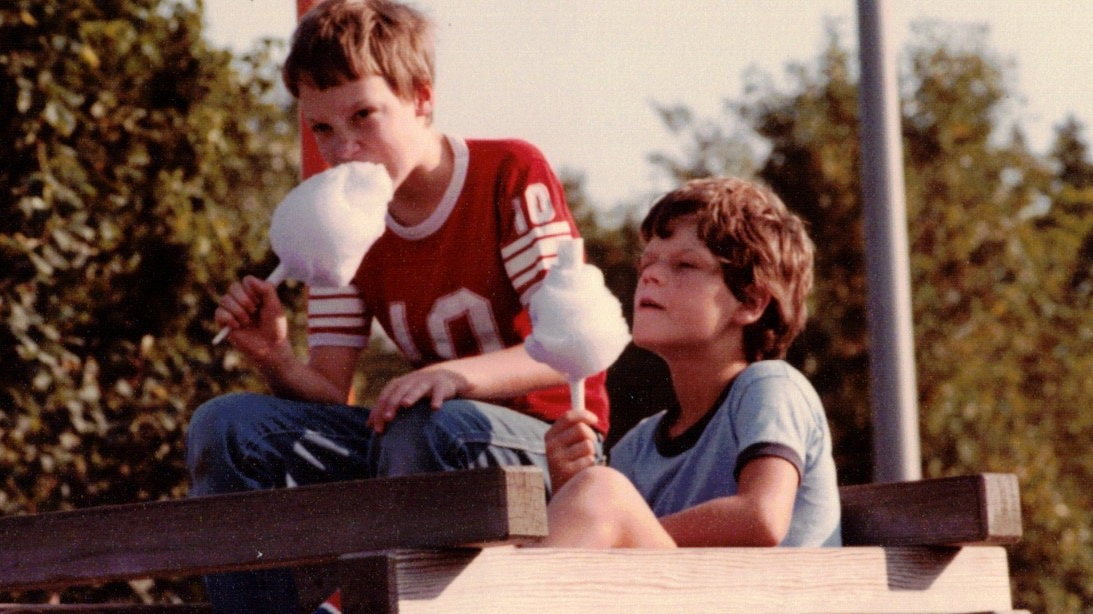
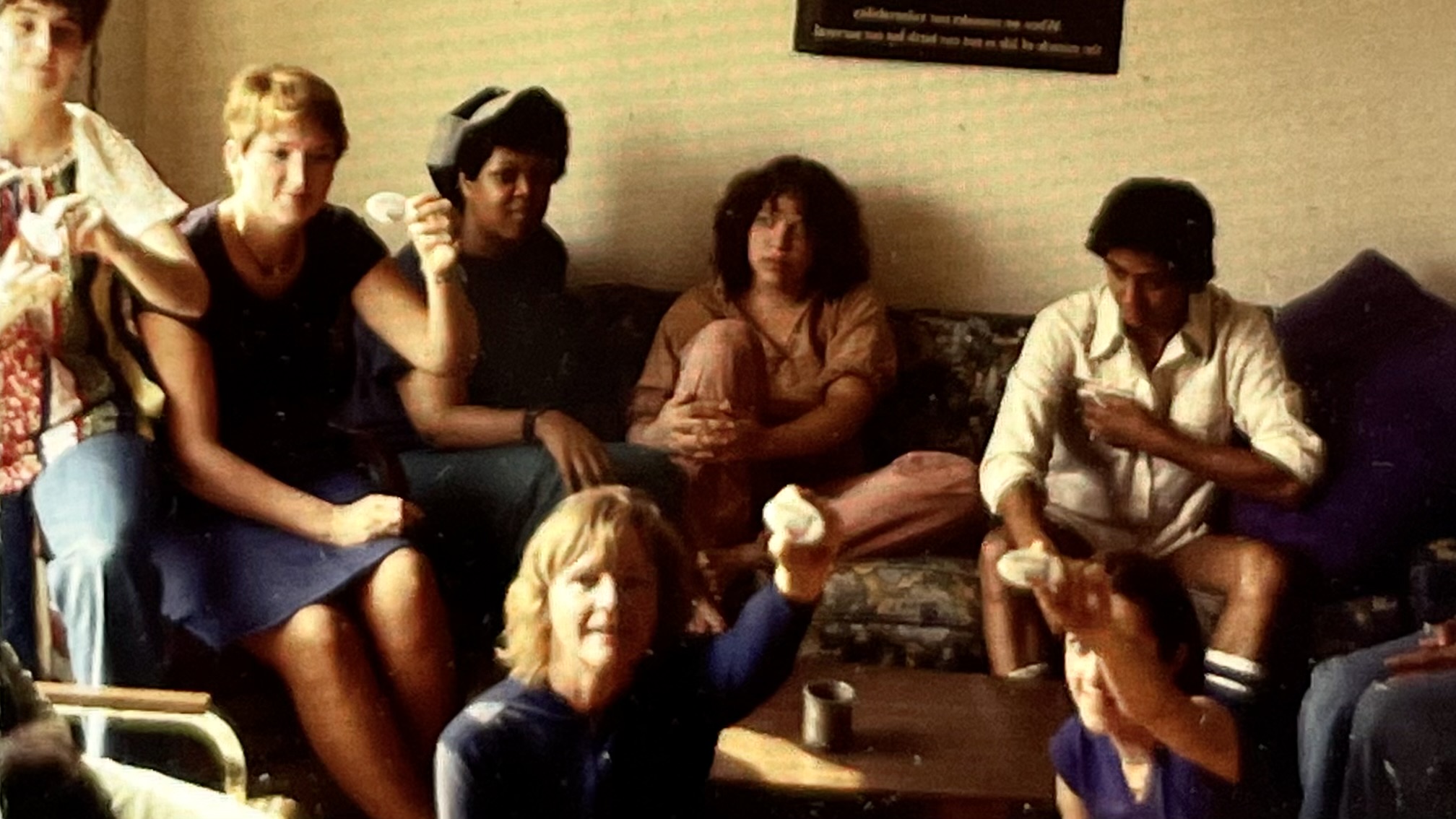
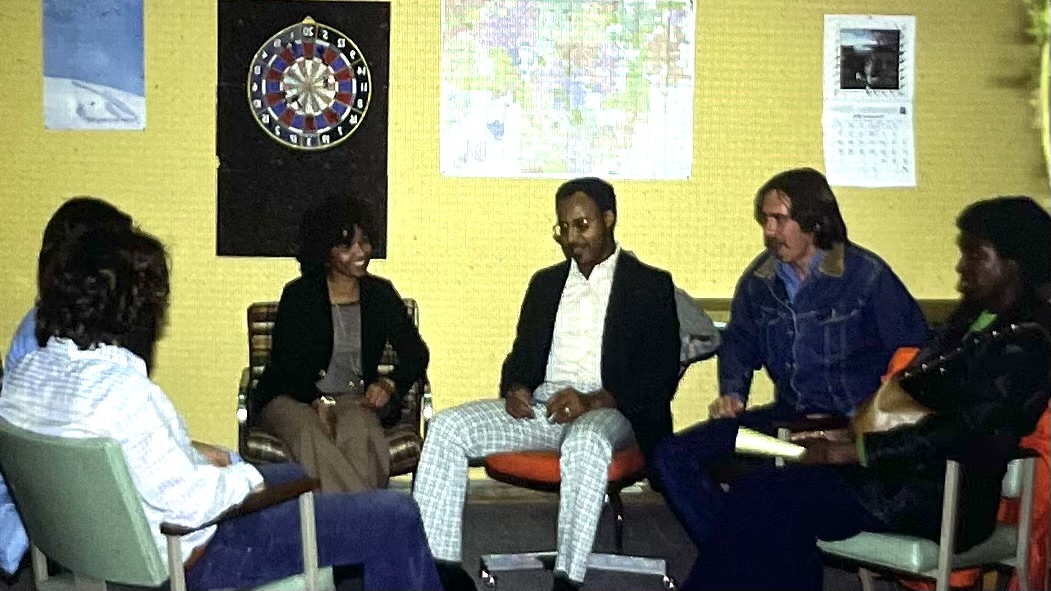
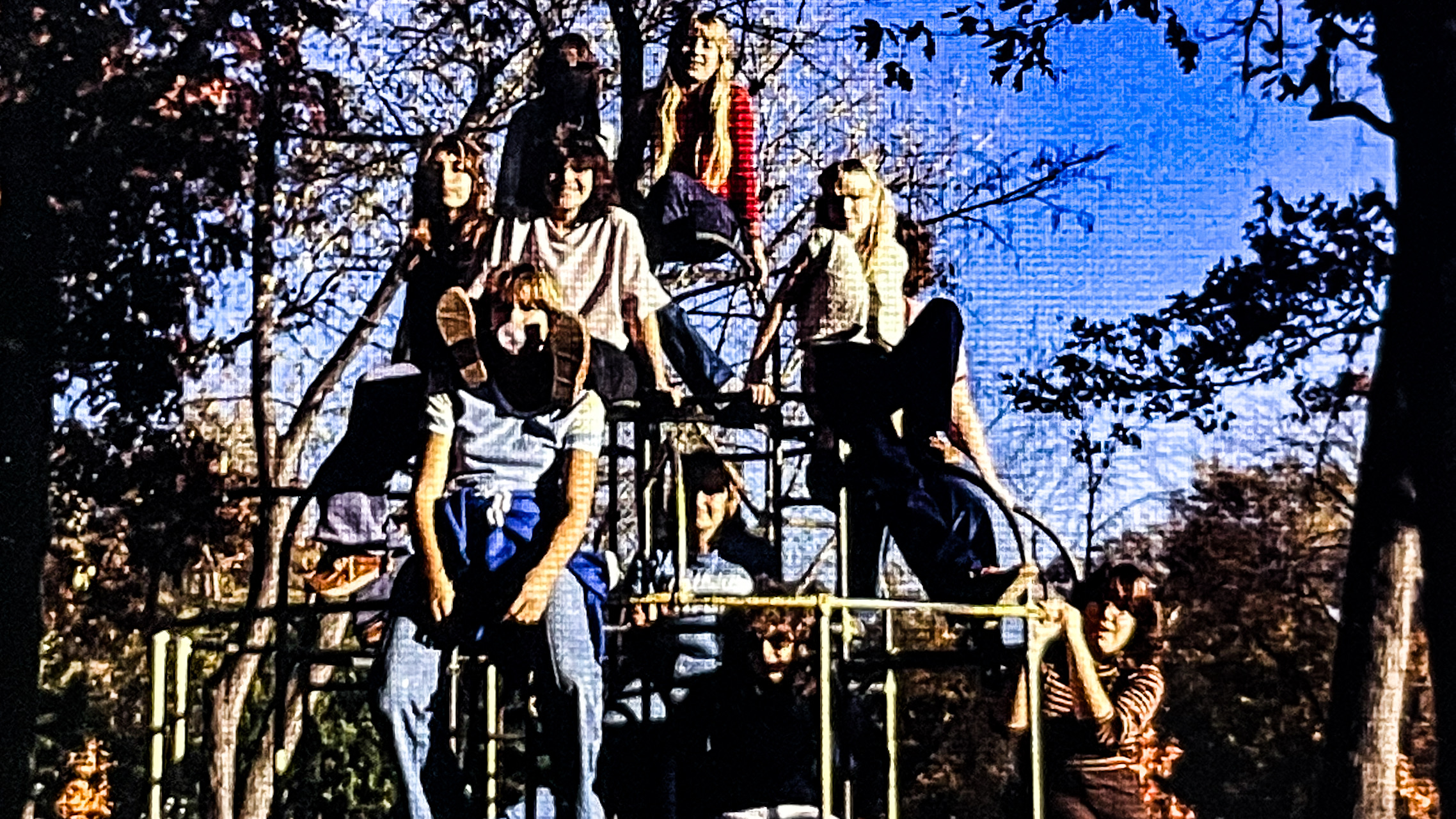
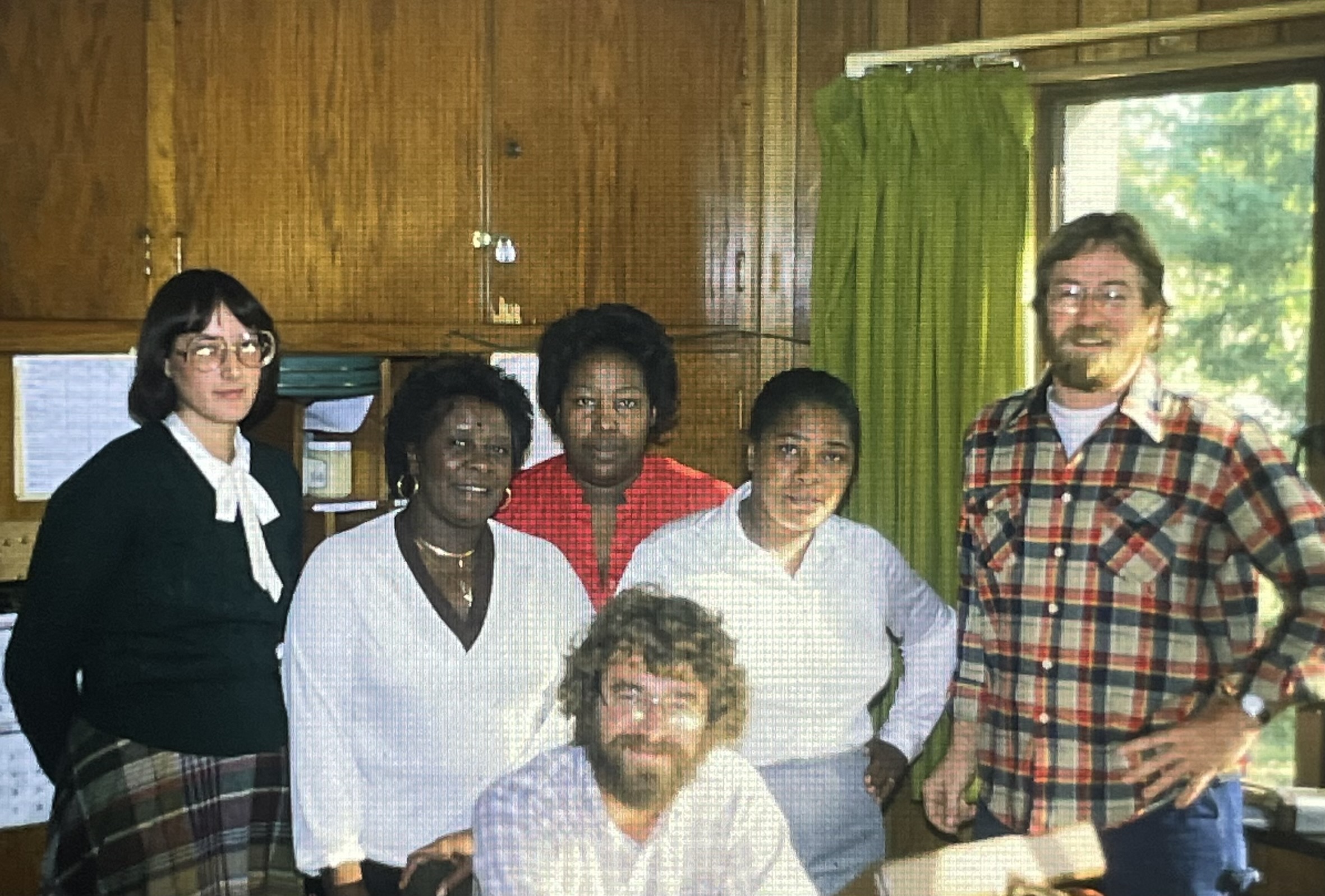
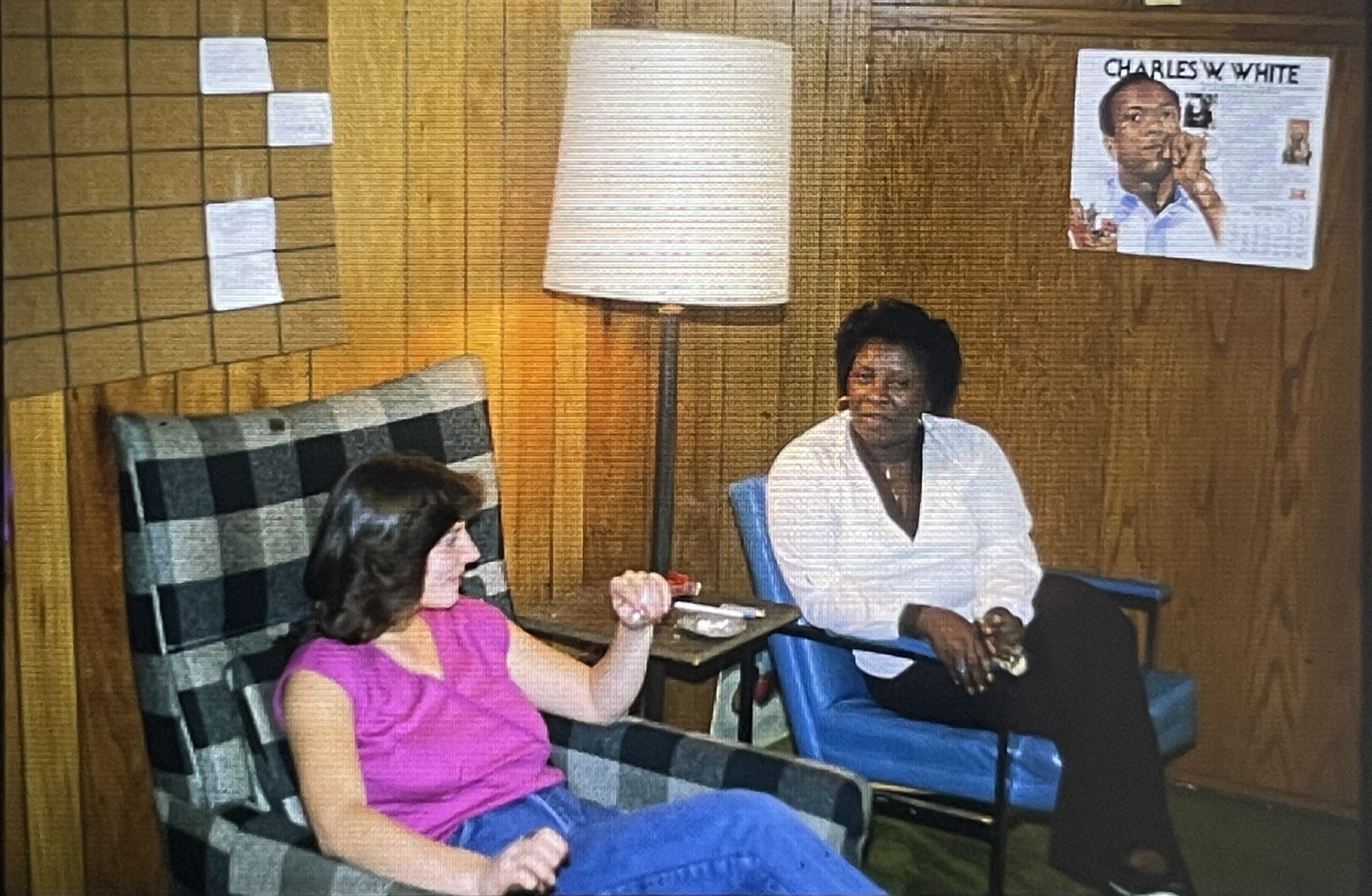
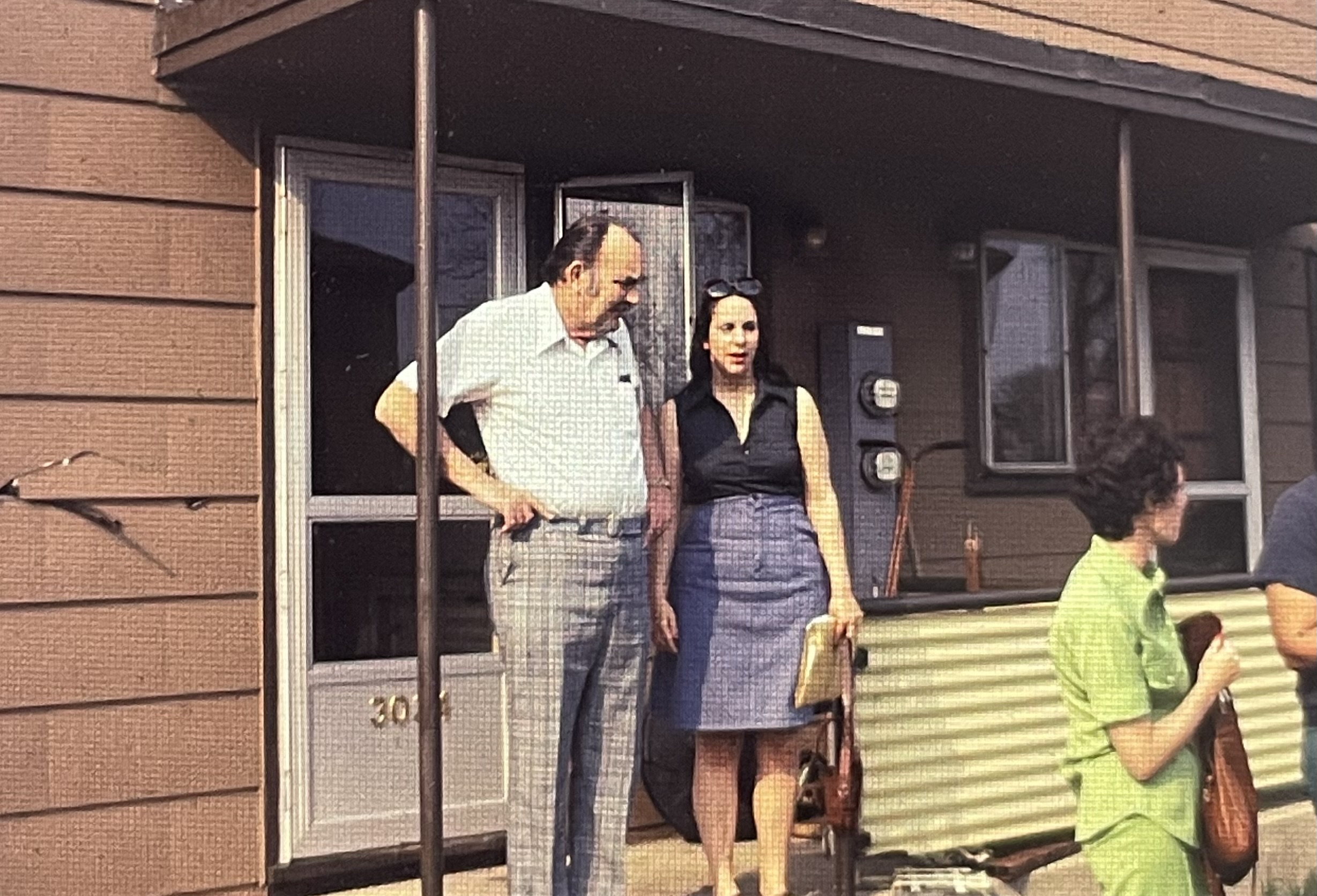
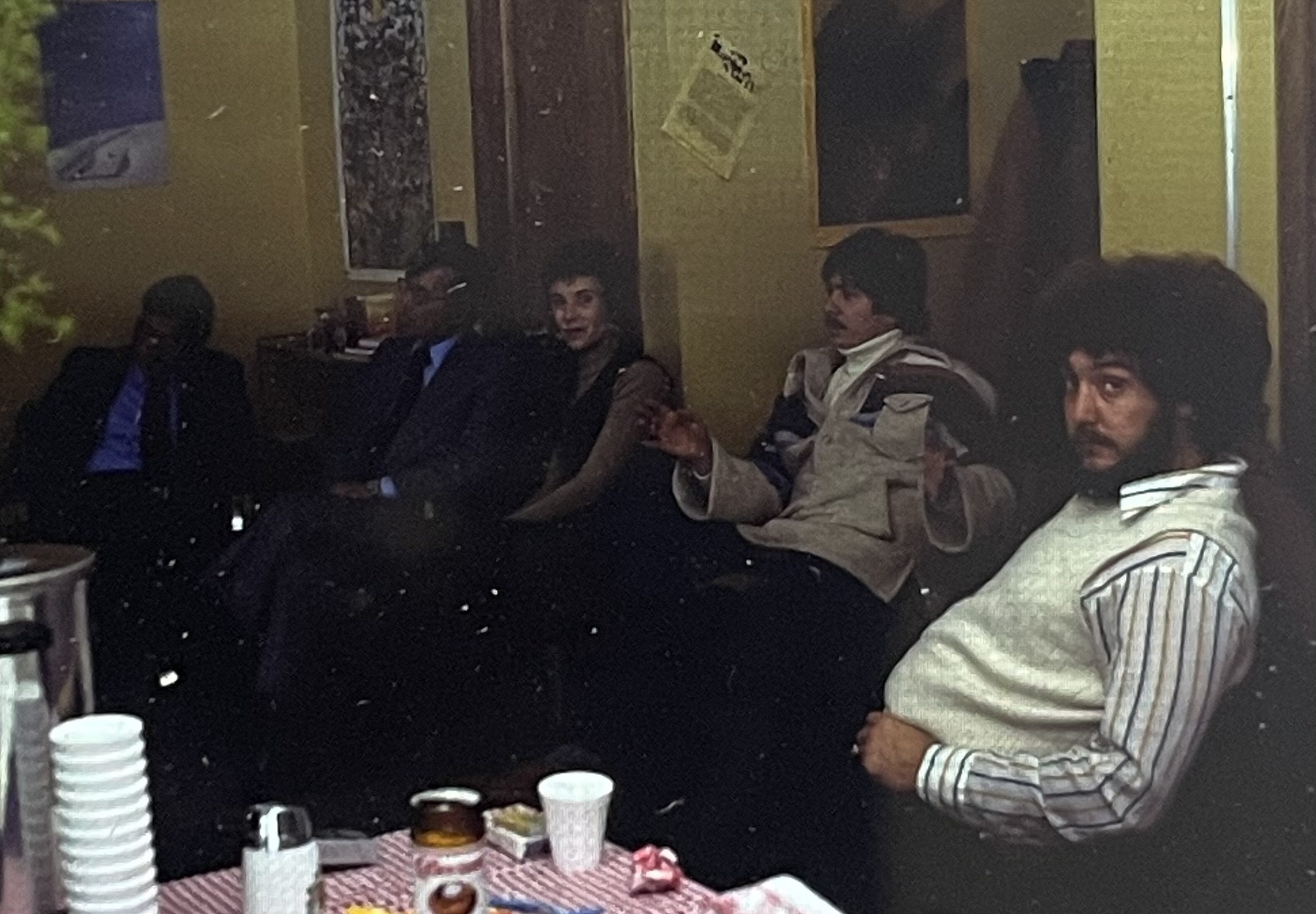
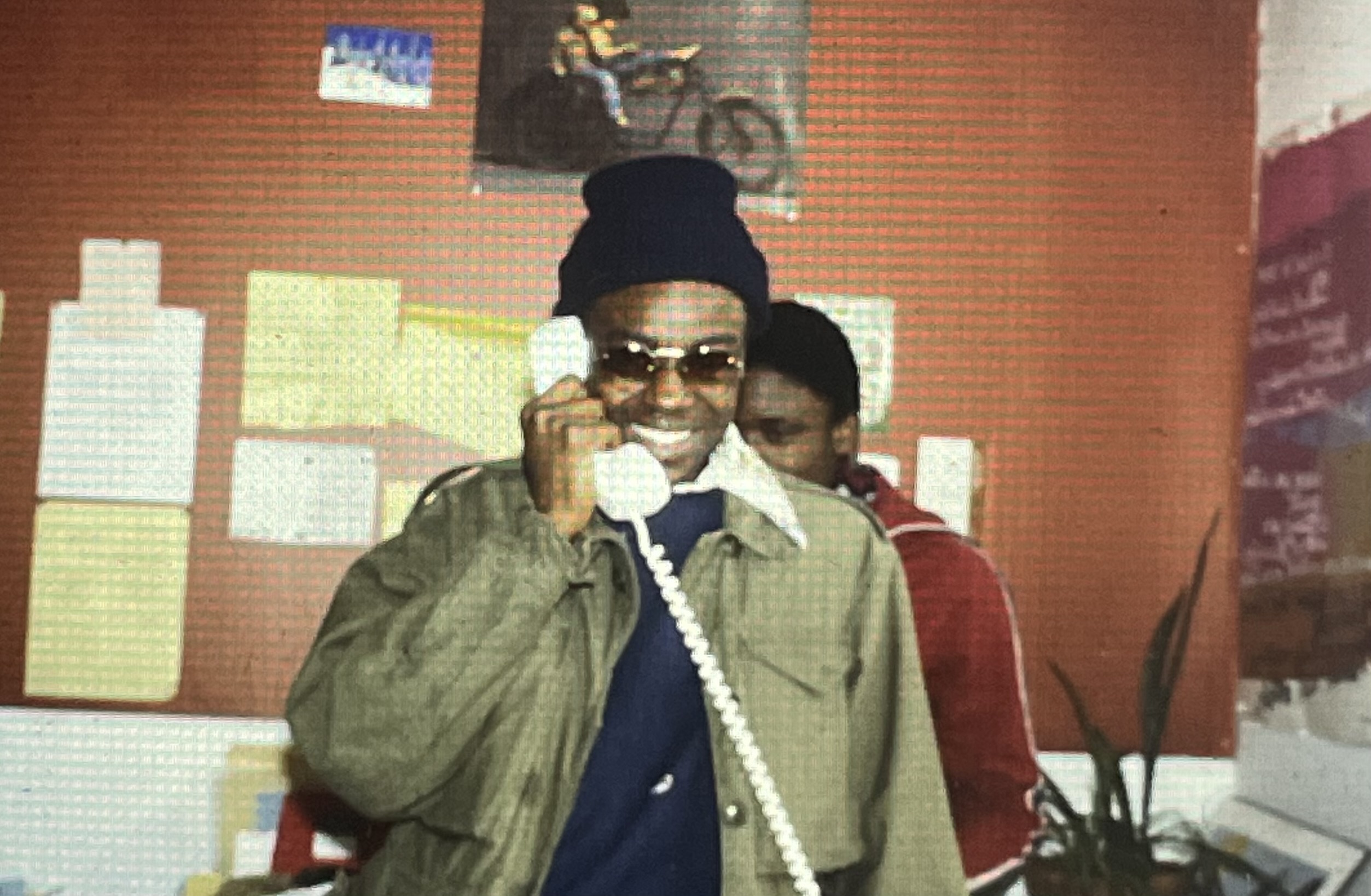
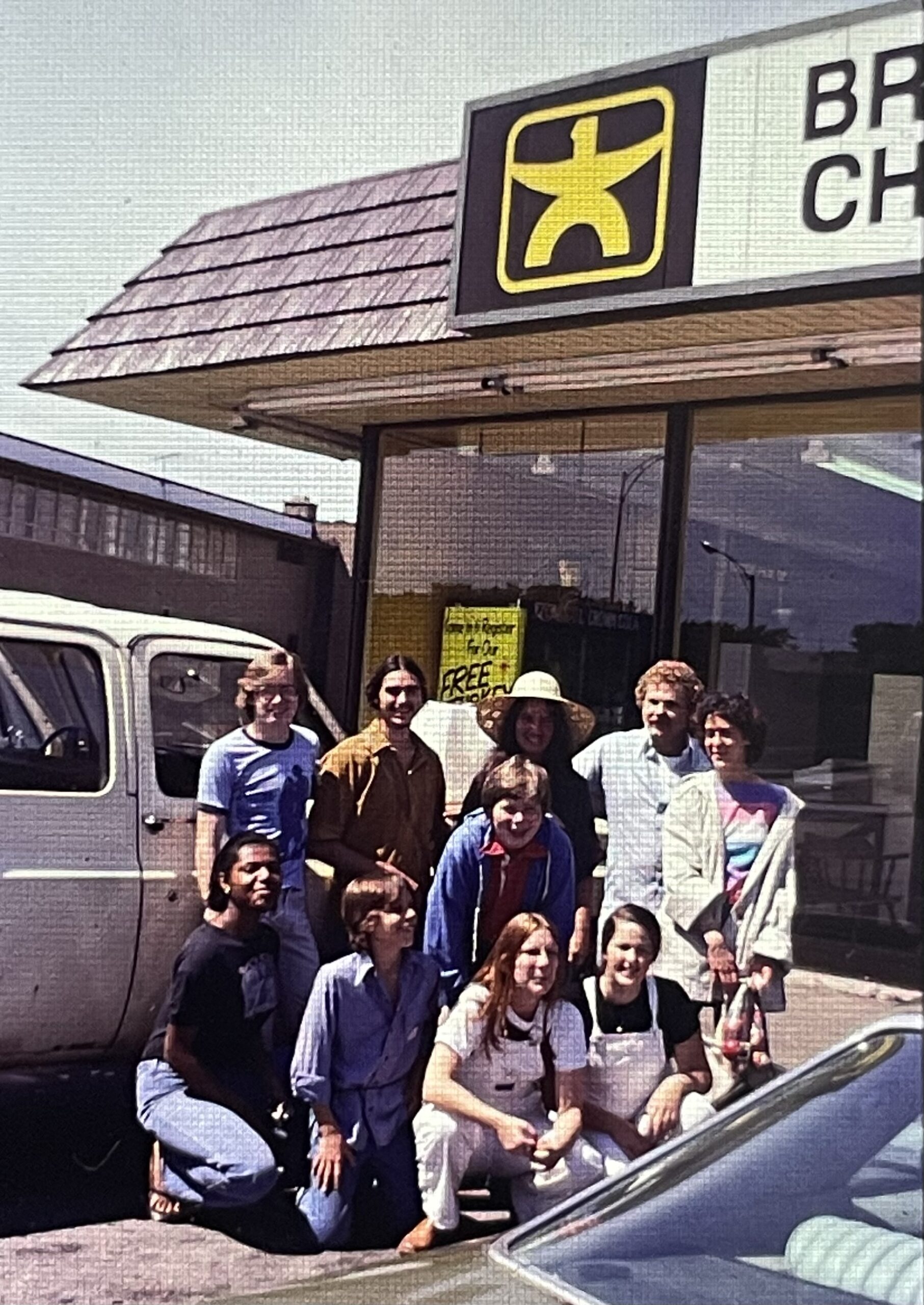
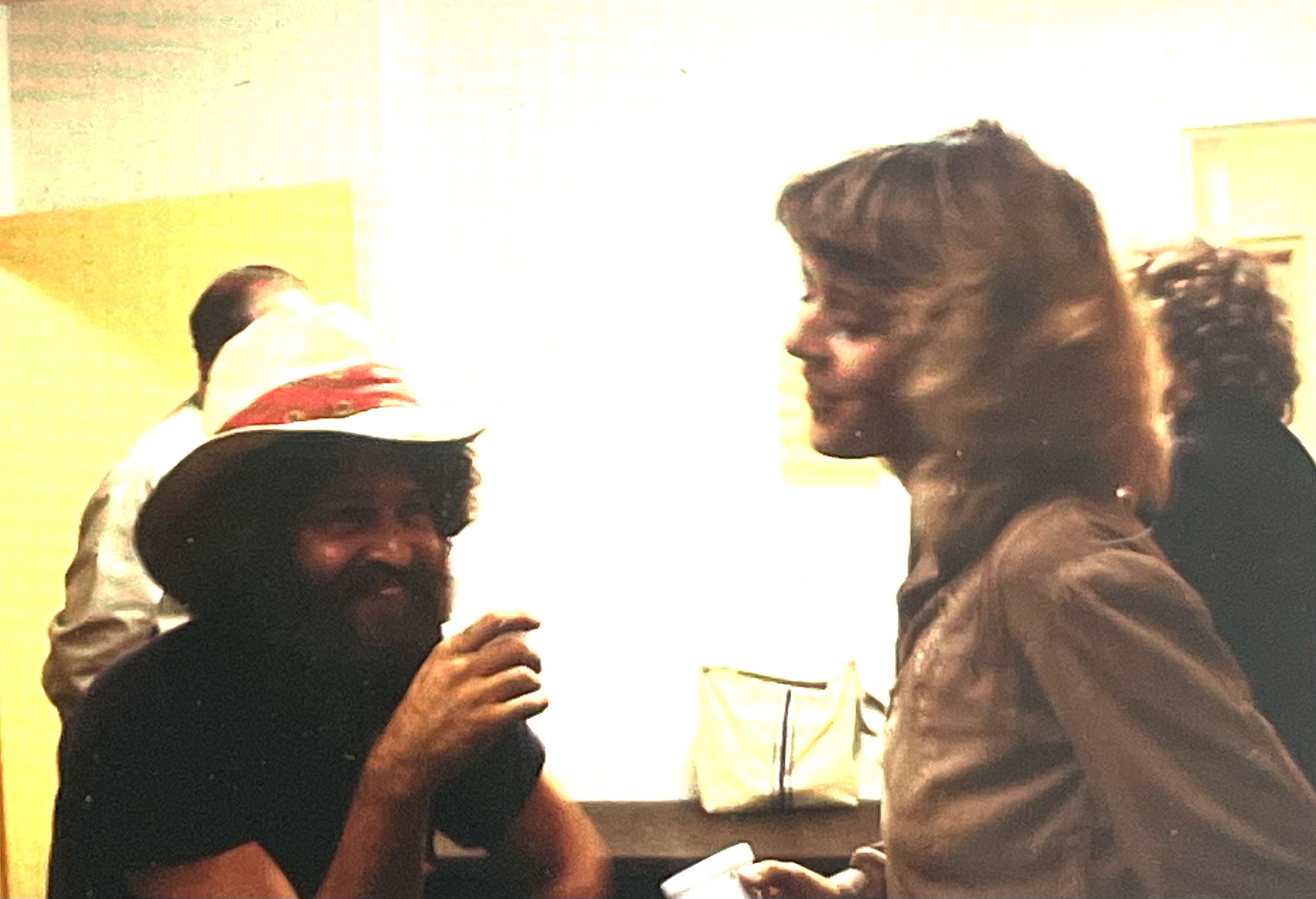
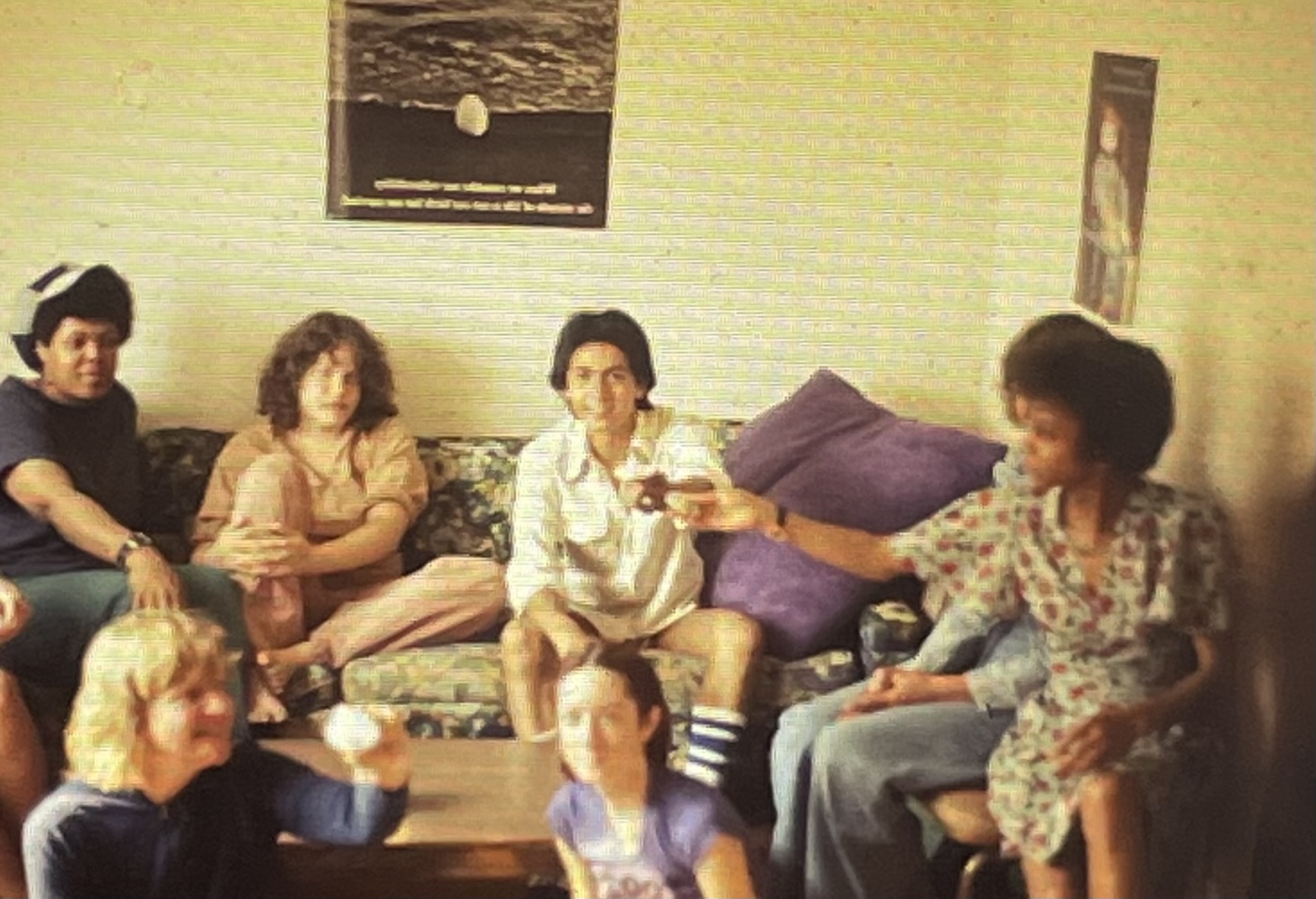
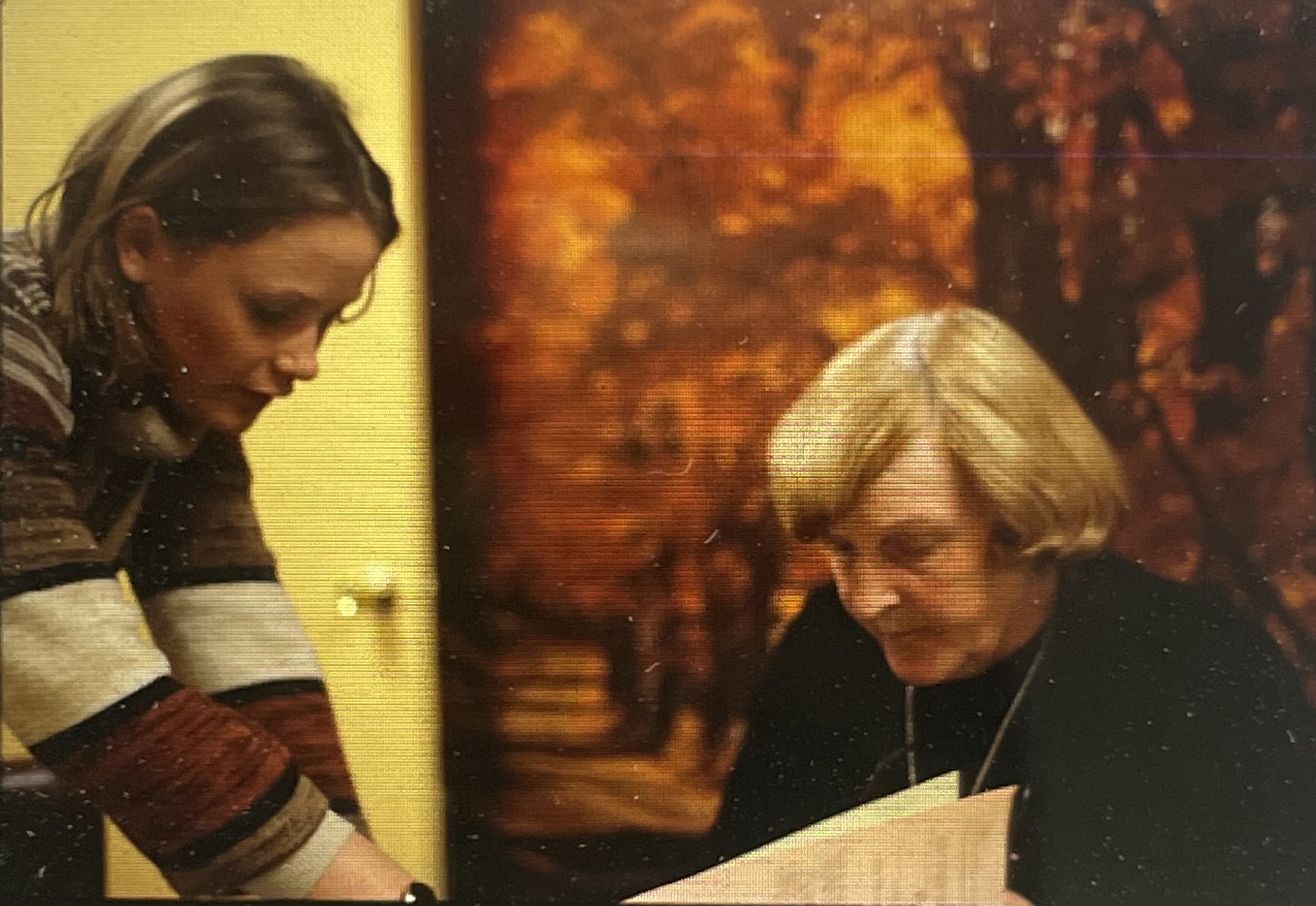
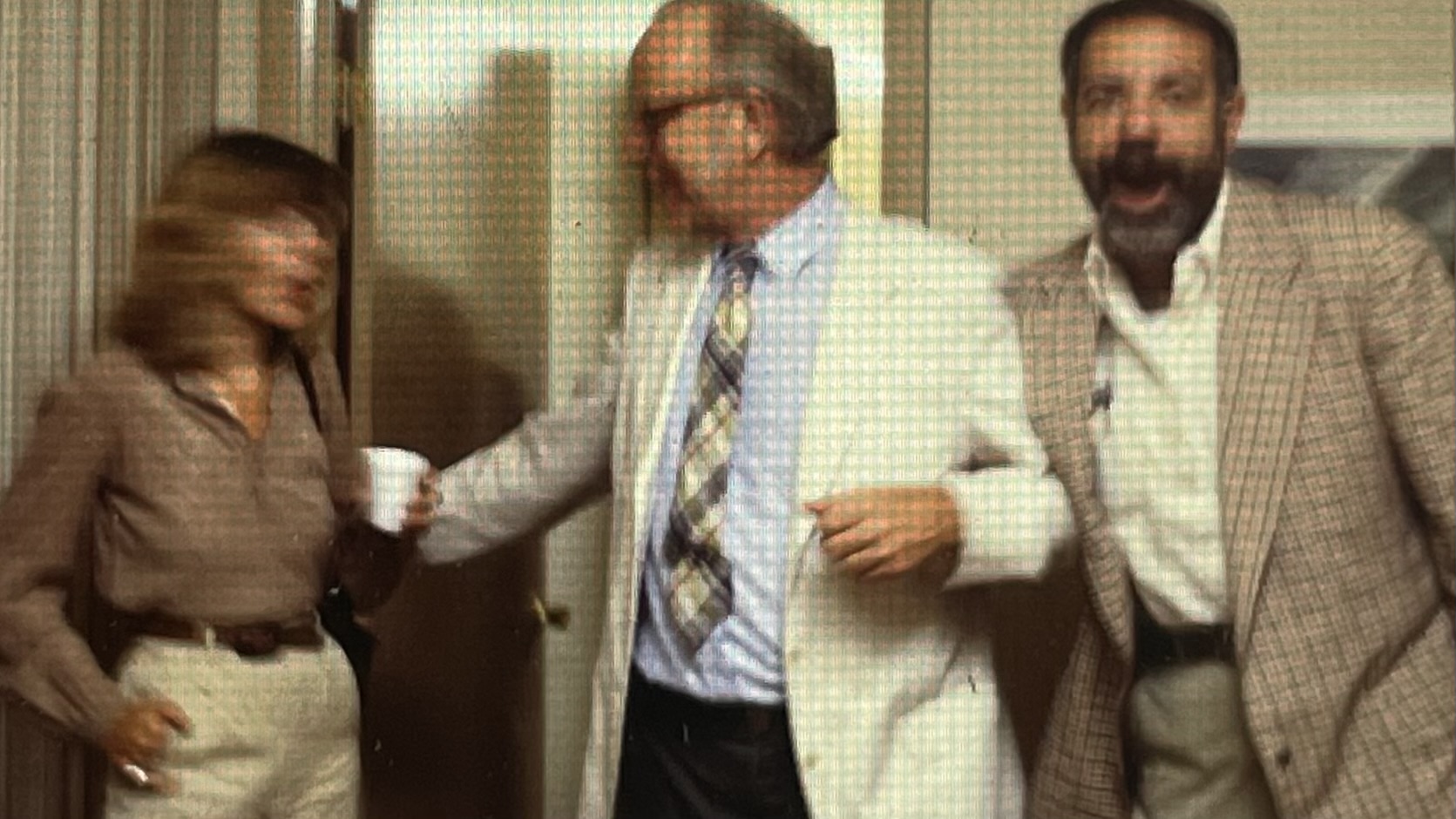
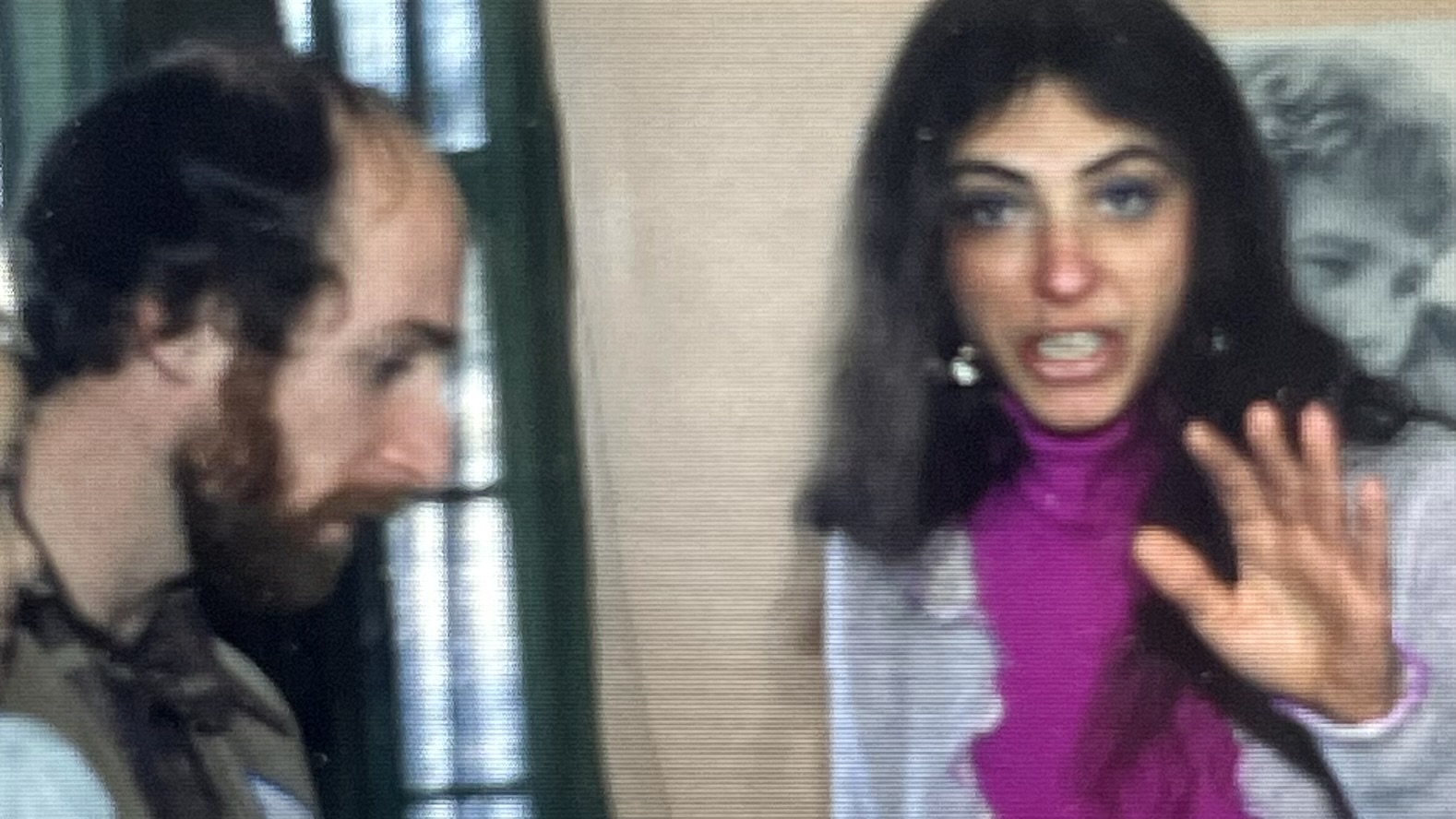
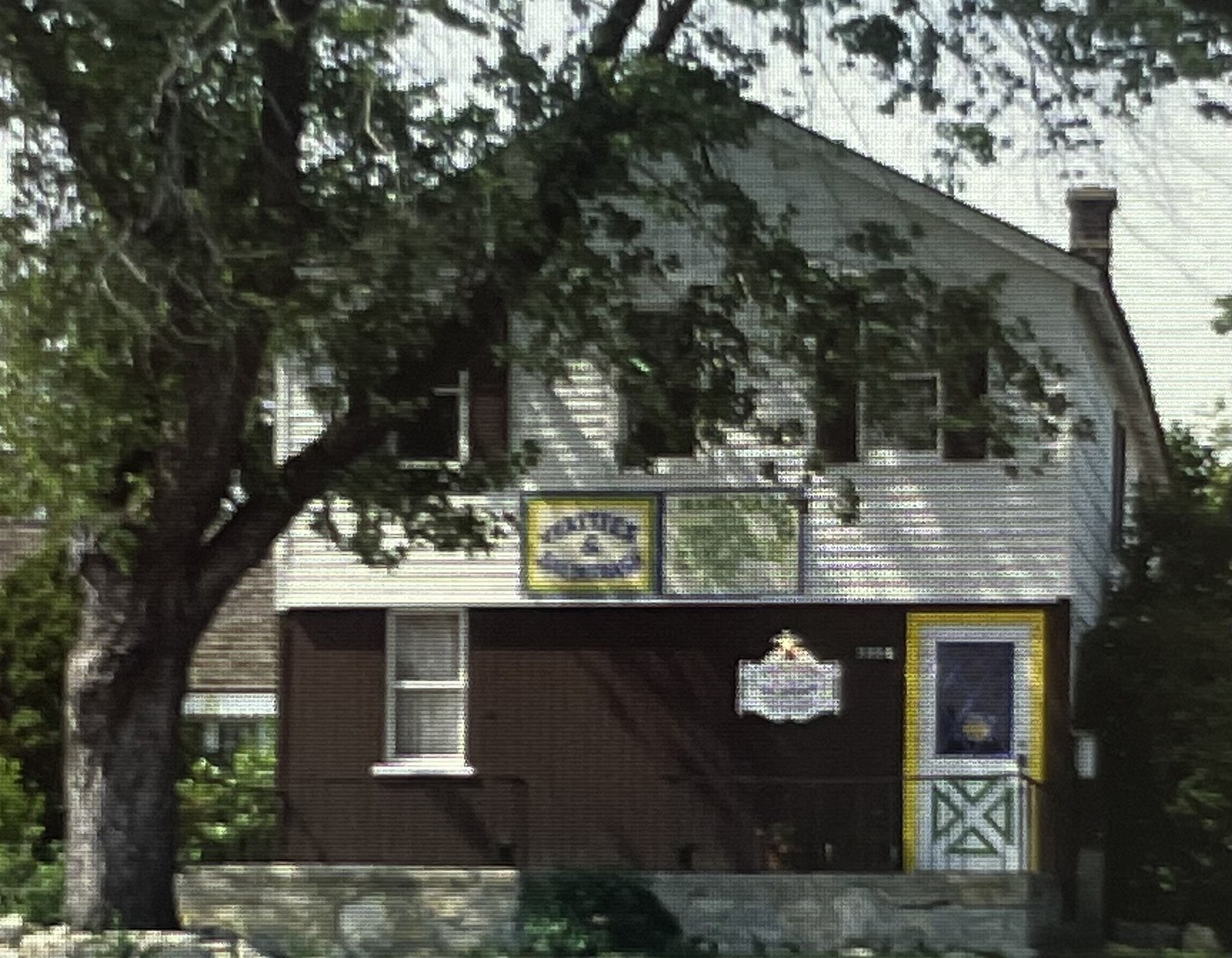
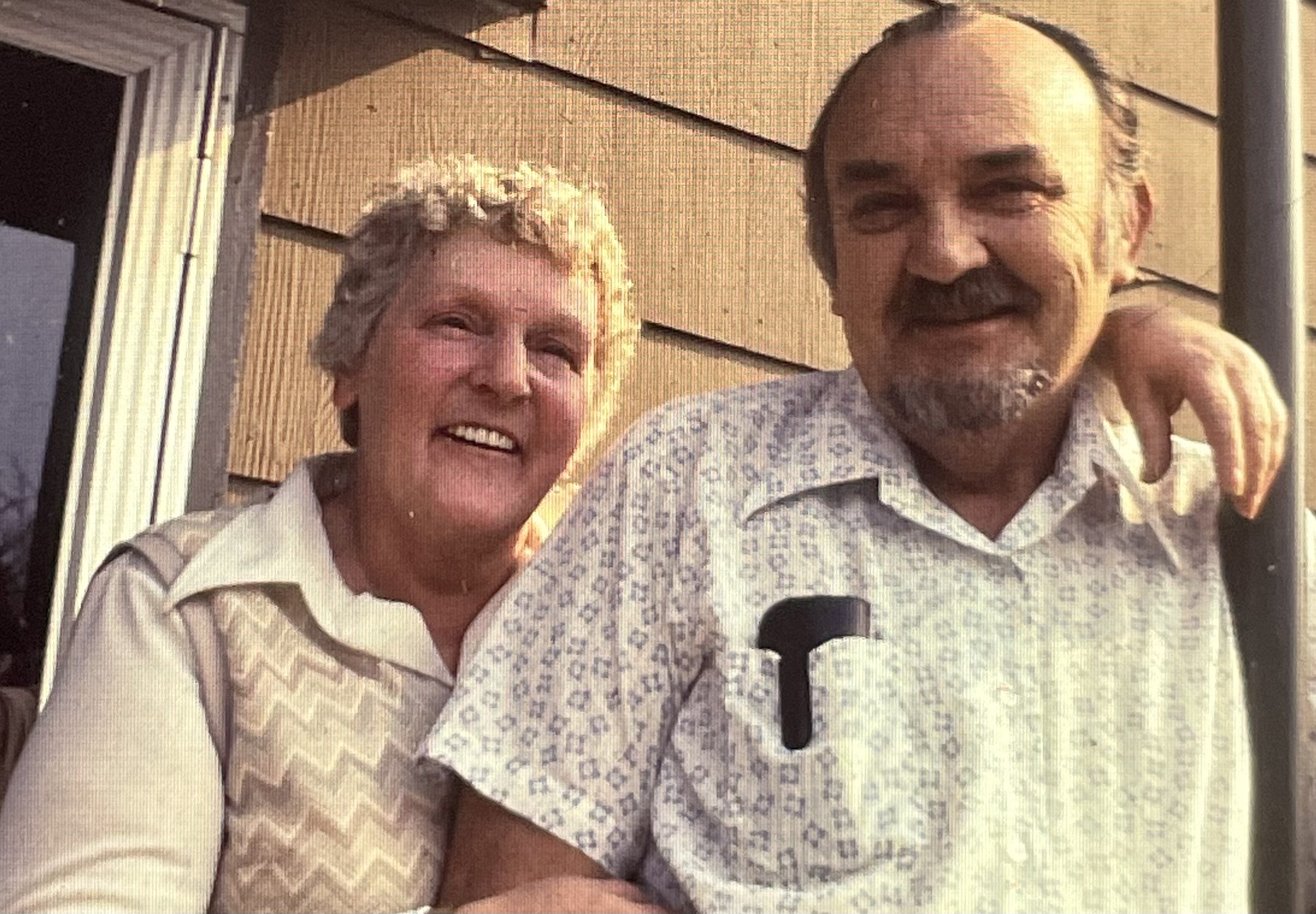
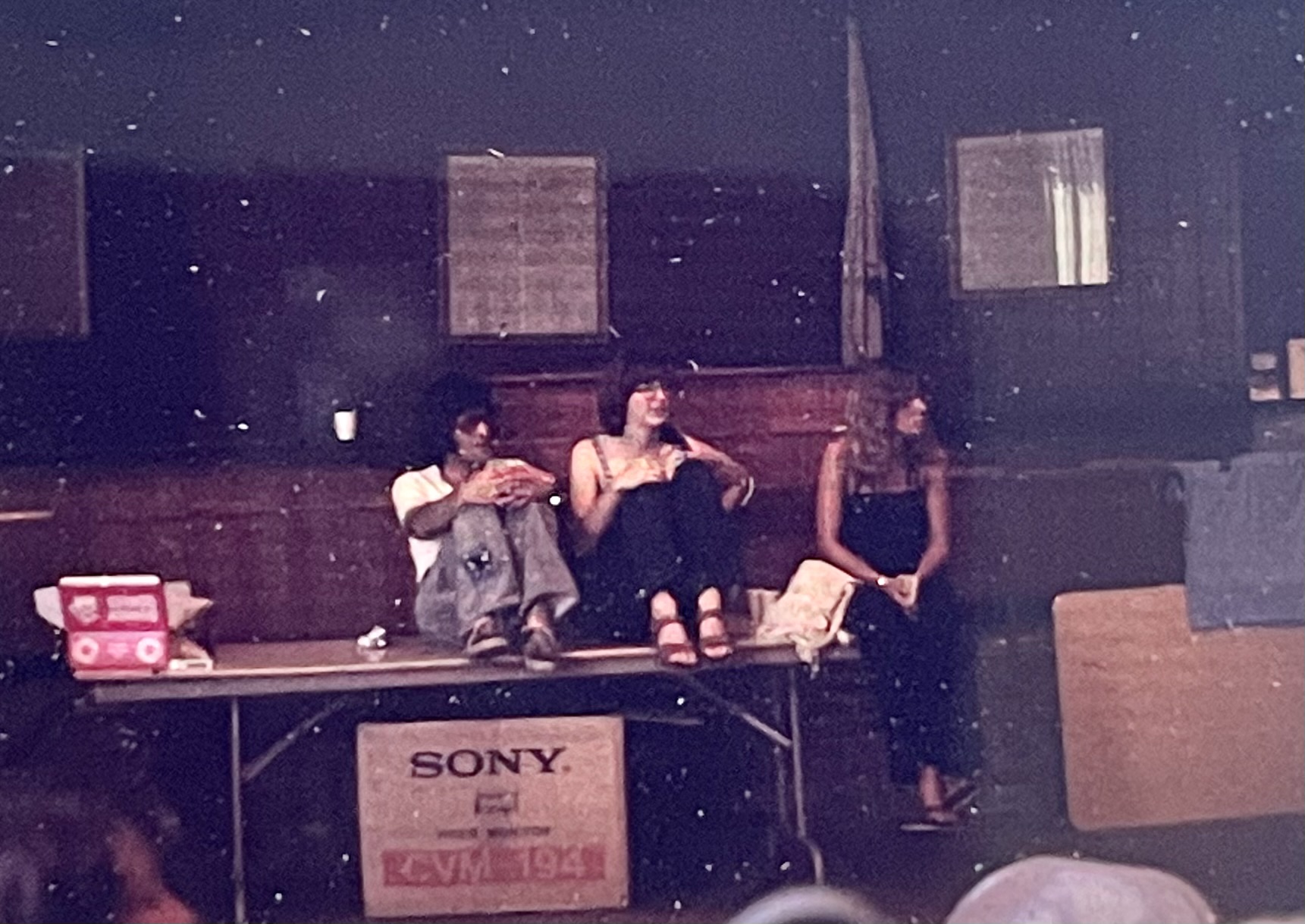
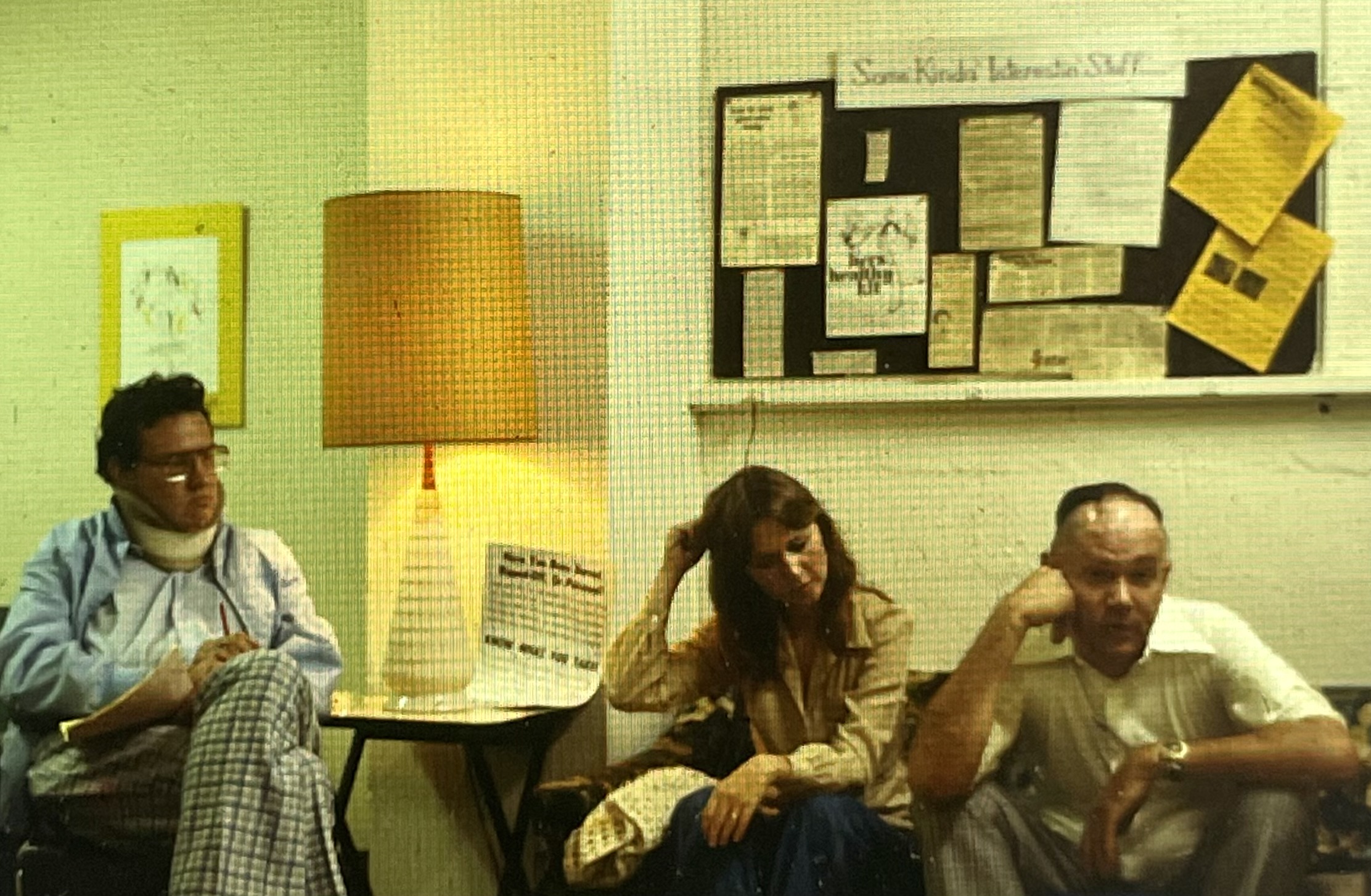
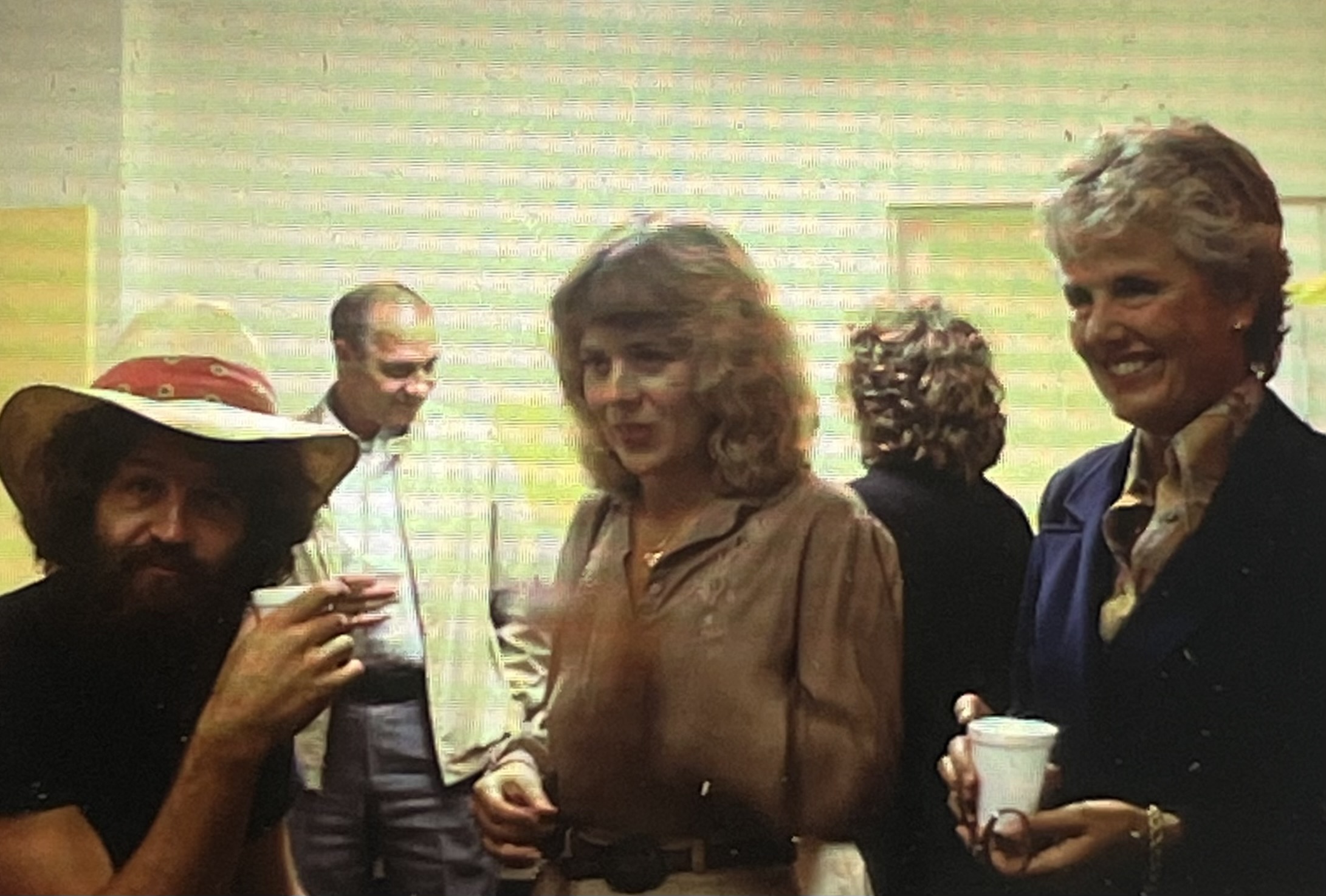
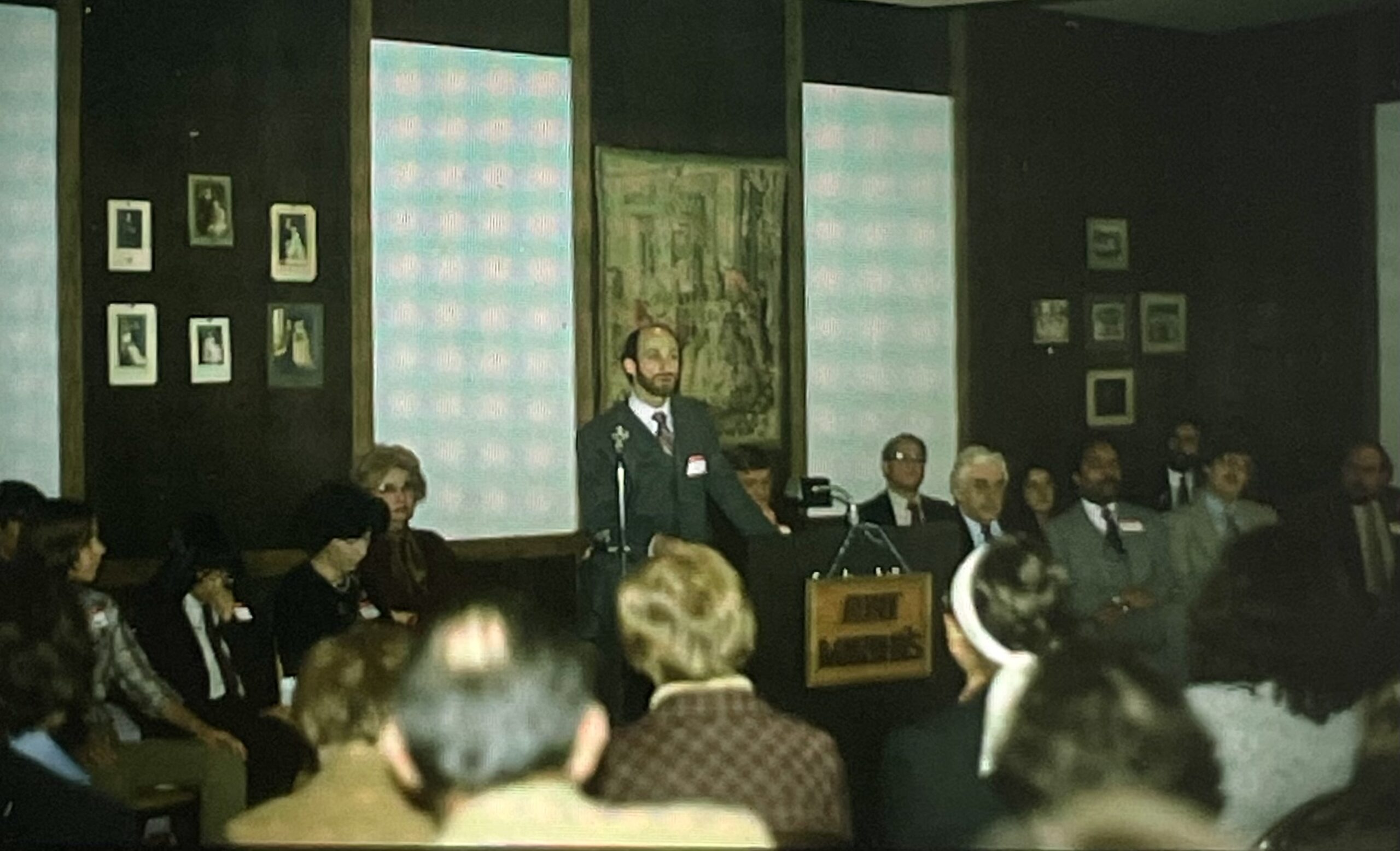
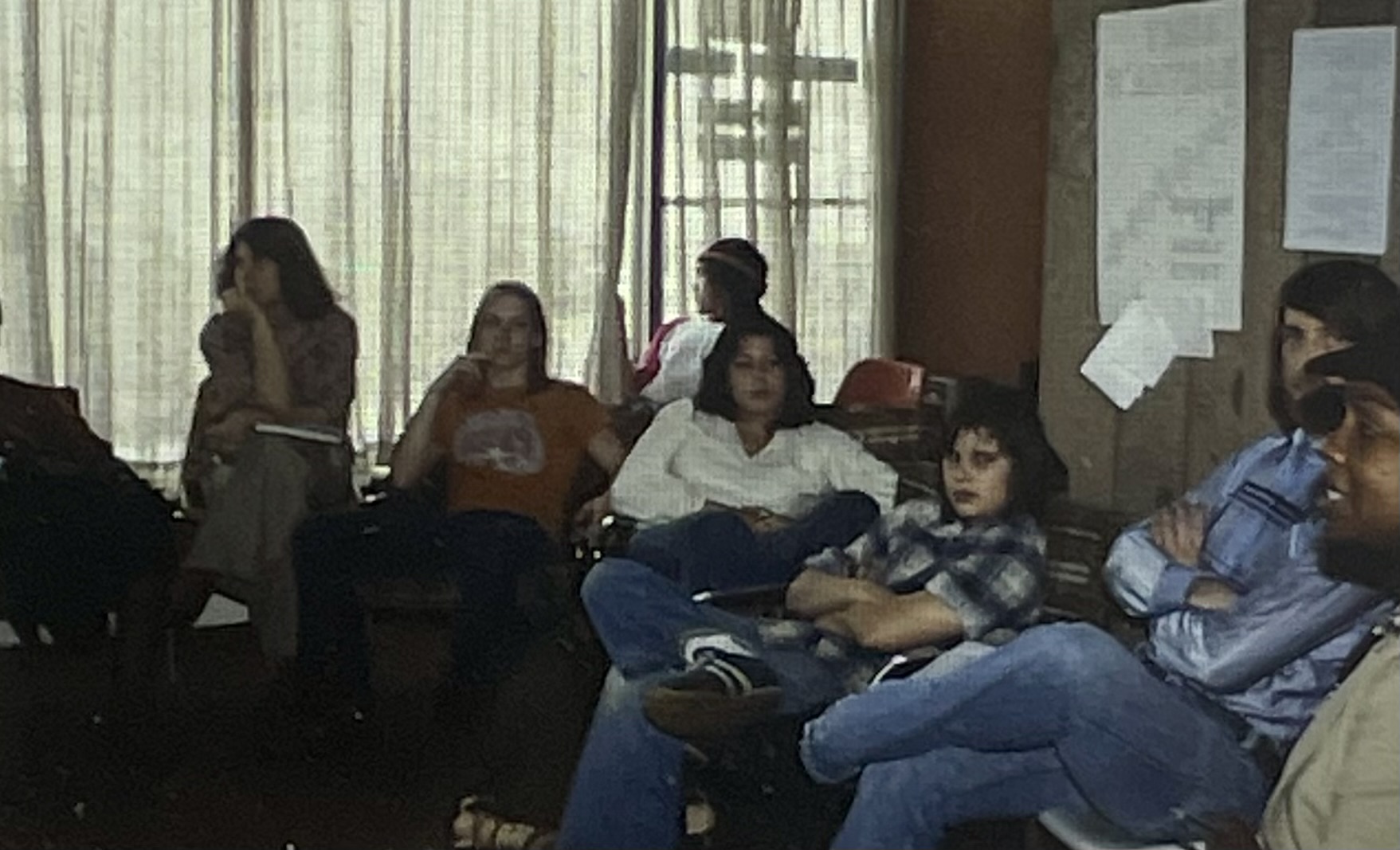
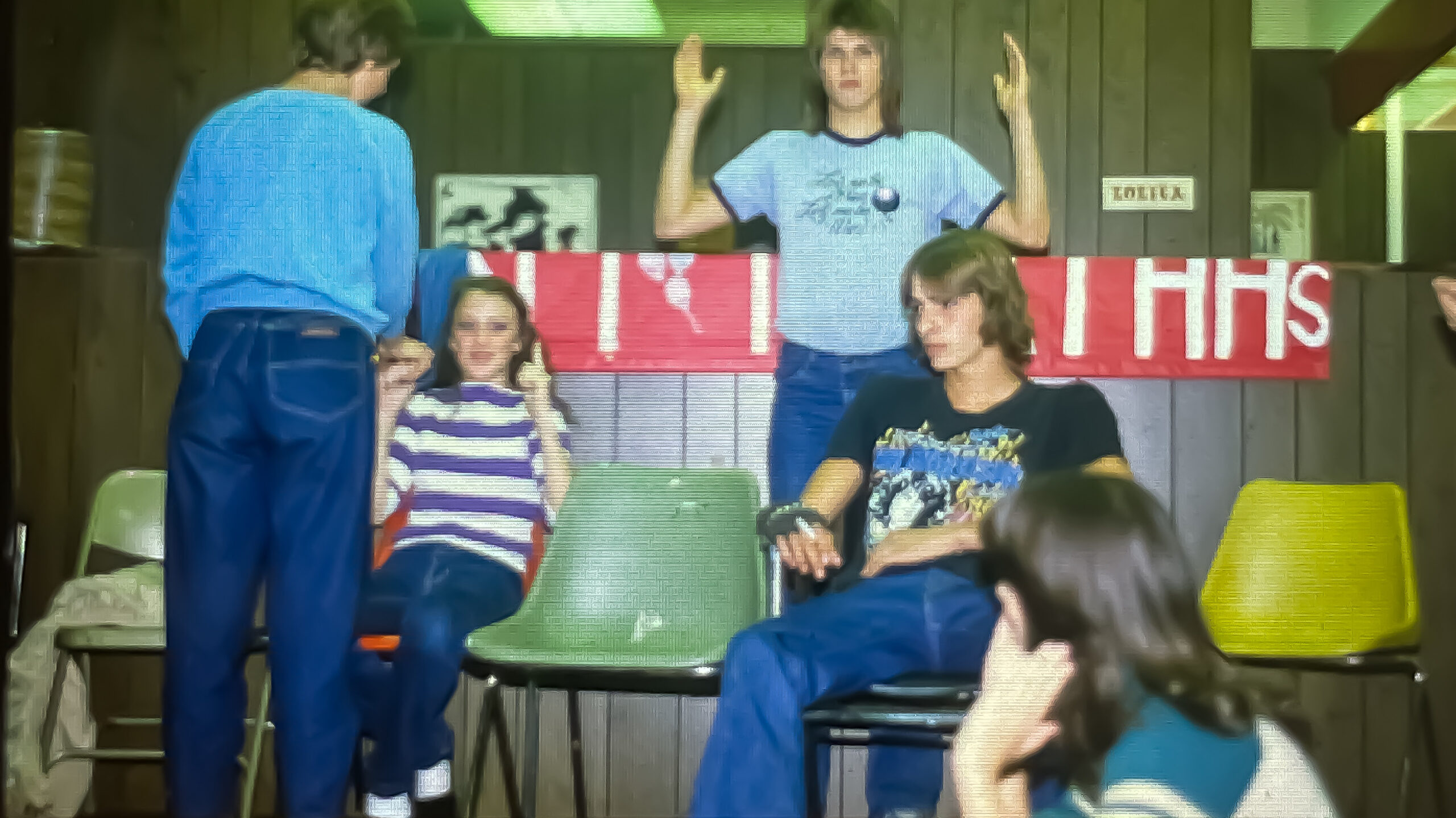
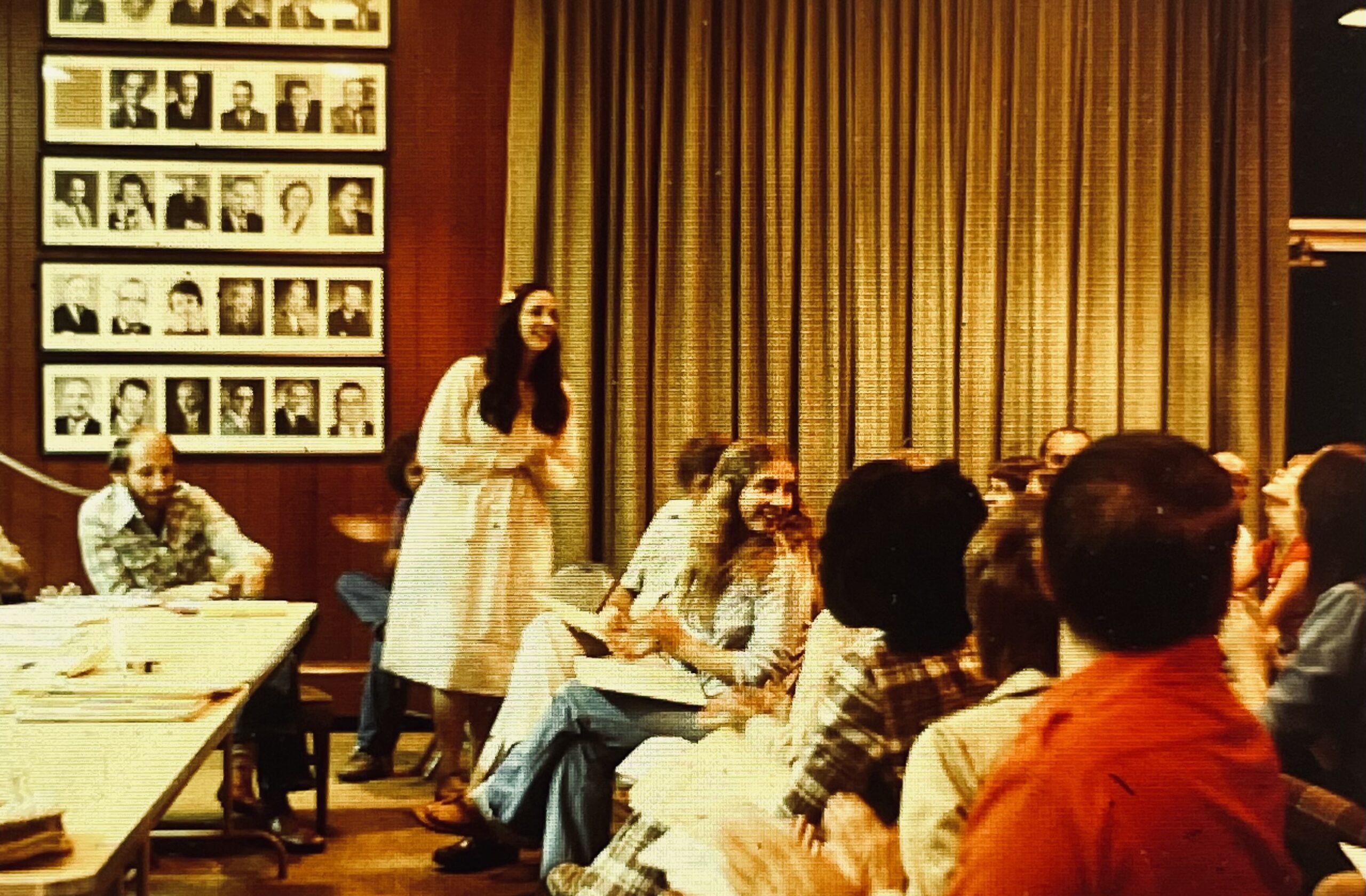
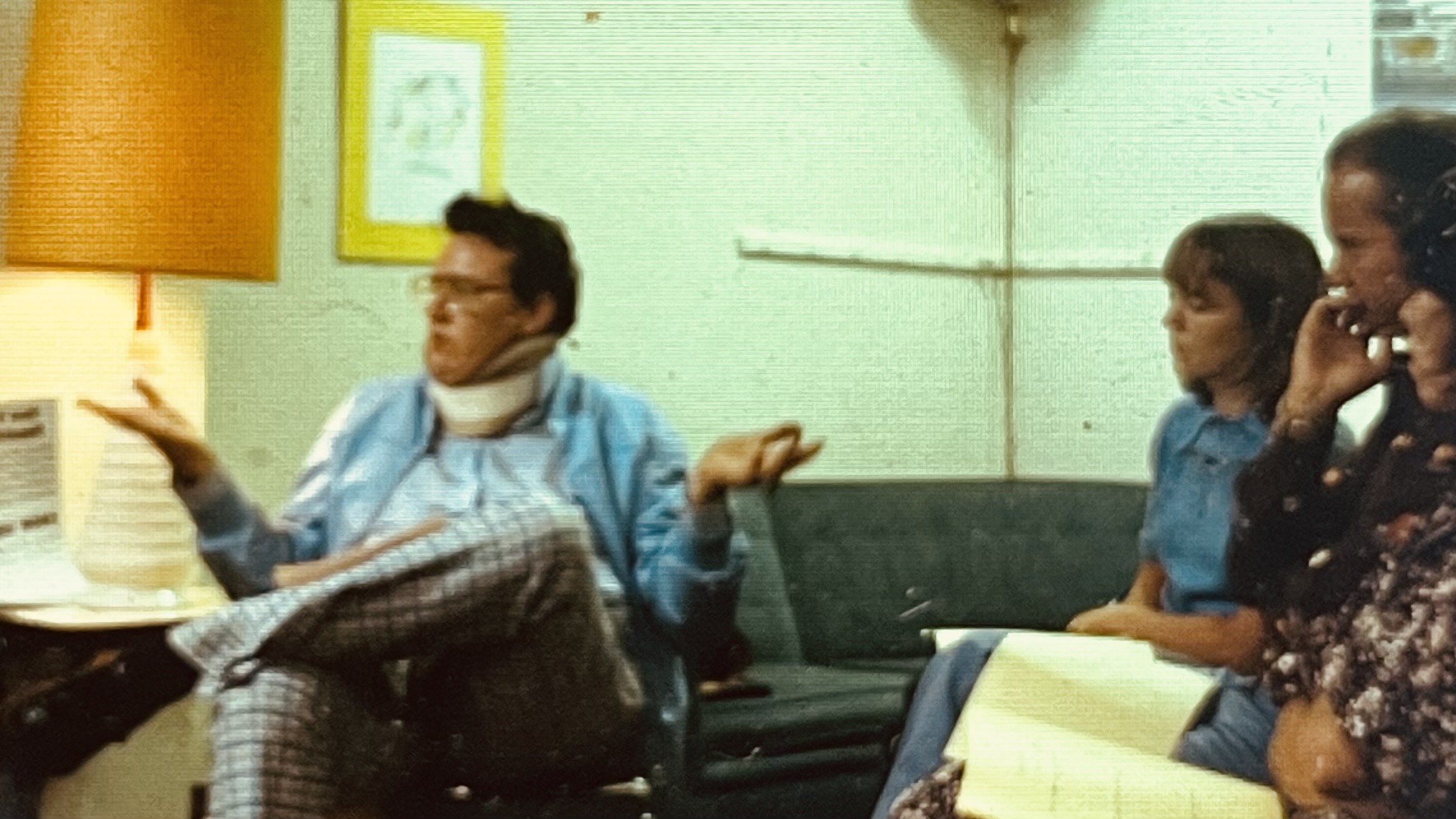
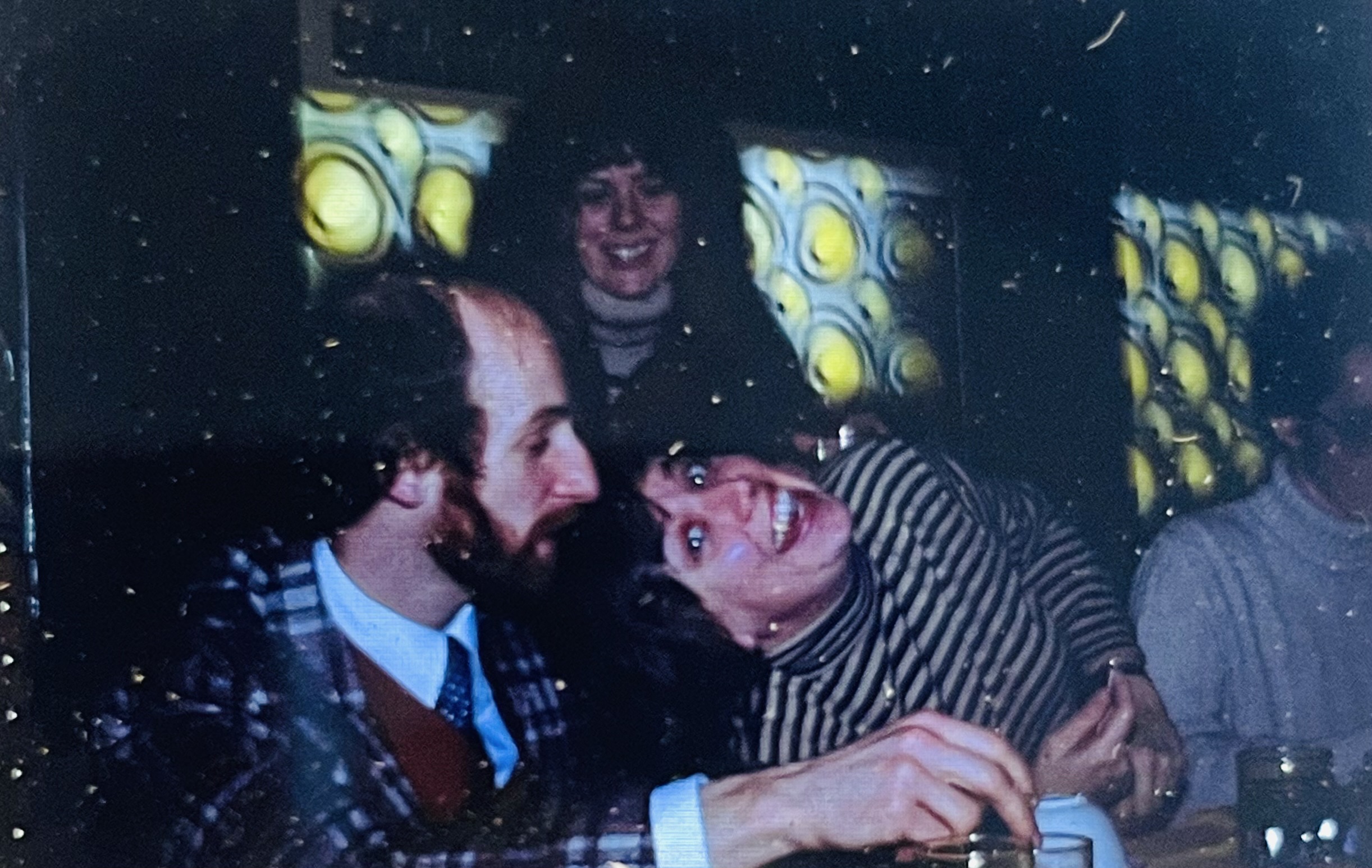
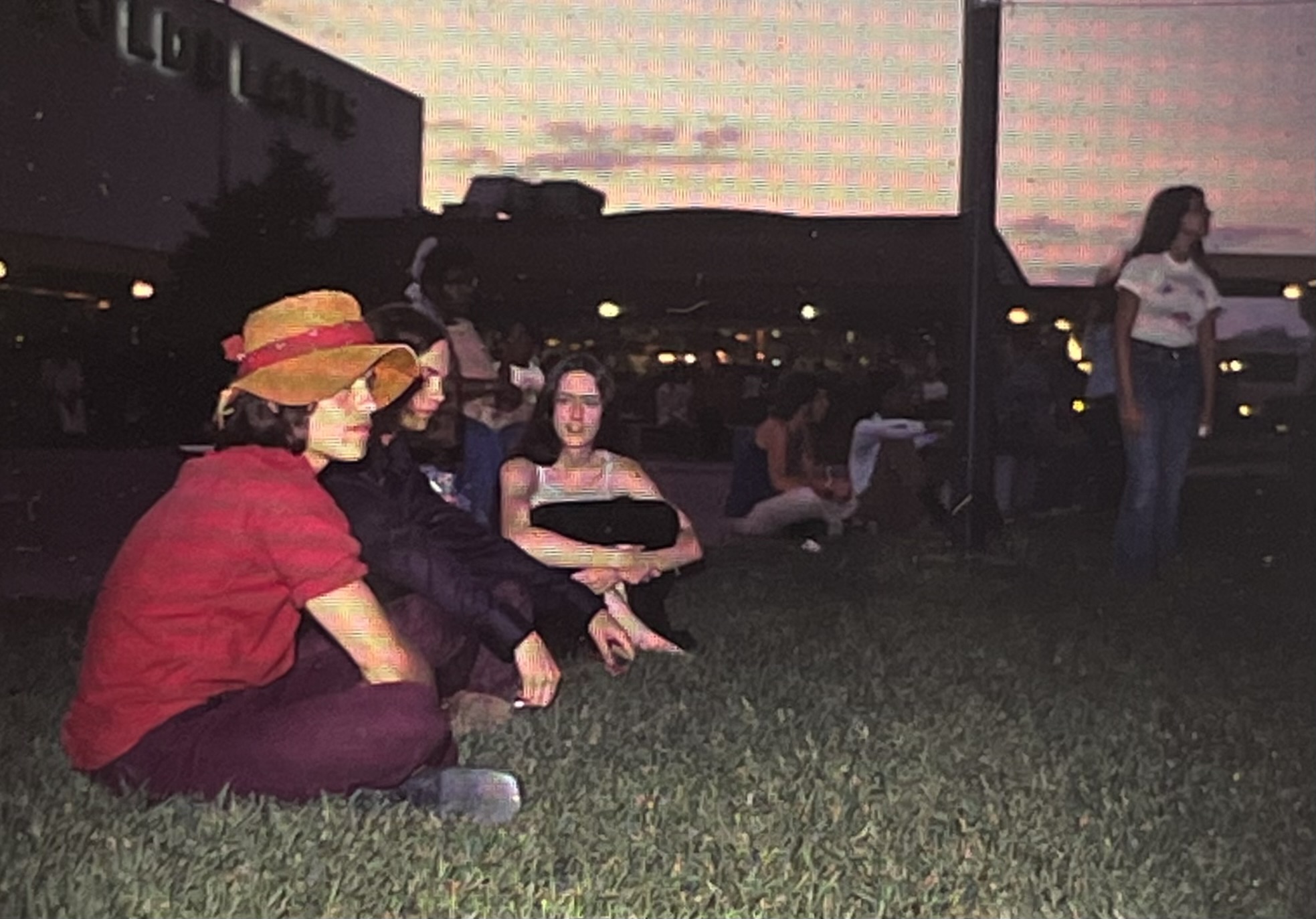
Those pictures captured the enthusiasm of the agency’s early years, even if the context (and sometimes the photo itself) is less than clear.
Today we’re stepping forward into a new decade, but only a few years have gone by.
It’s 1982. And you’re invited to Aunt Martha’s 10th Birthday Party!
Aunt Martha’s at 10
The Setup
Aunt Martha’s welcomed staff, volunteers and community members to celebrate the agency’s 10 birthday. At least one of our guests rode their motorcycle. Does anyone know who?
The Cake
Somebody baked this cake, which looks timelessly and unhealthily sugary. That’s 1982.
The Balloon Toss
The Fun and Games
And of course, a few of our friends.
…and The Chicken Guy
Posted on August 5, 2022
Slides from the 70s
Do you remember how hard it used to be to take a really great picture? Red eyes, people looking in three different directions. But how about SHARING your pictures? At Aunt Martha’s, we took the whole show on the road. The whole kit and caboodle — organizing slides and feeding them into the projector.
Those slides still tell a very interesting story.
Celebrating our Employees
We’re kicking off our month-long celebration of Aunt Martha’s employees by diving into the agency’s photographic archives. These pictures have been scanned from slides dated between 1975-1980.
Slides from the 70s
Because you always need a good presentation.
Posted on July 29, 2022
An Old Friend
Ron Stuyvesant came to Aunt Martha’s in 1999, wooed from a community-based organization in Central Illinois by Gary Leofanti. The agency – which that year became the first child welfare provider in Illinois to receive Federally Qualified Health Center status – was, despite its stellar reputation, a revelation to the veteran administrator. The next 16 years would be one revelation after another.
We were very glad to sit down with our old friend earlier this year, and we are happy to share a portion of that conversation with you today.
Aunt Martha’s like it’s 1999
When I actually got to the agency, I was surprised. Look, Aunt Martha’s does healthcare! Medical care. There was no agency that I’d ever worked at that did something like this. It was always referring to other organizations and often that would simply be, unfortunately, sending a referral slip. And whether they got the care or not, it was hard to find out.
So I was amazed that Aunt Martha’s did that, did family planning, did substance abuse services, things that most social service agencies were never involved in.
Growing Health Care Services
I was lucky to be there when there was tremendous growth in health care services. Initially, the focus was, “Let’s just add some more services at the health centers we had.” And so we got some grants for that.
Then [the focus became], “We should add some services that are needed,” which has always been Aunt Martha’s forte, and behavioral health services were added. And a lot of community health centers did not want to touch that – a very difficult component to do as part of a community health center.
Aunt Martha’s began to see that there were other communities either that we were involved in, or maybe some that we didn’t have any presence, that really needed community health care. And [the agency] also began to think, “We don’t have to just build health centers. We can partner with hospitals and other community agencies and put health centers where they’re really needed.”
It just continued to grow.
Consistent Commitment to Quality
You need to be able to demonstrate the capacity and the quality of services. And Aunt Martha’s really did that. So we had the documentation needed to show our commitment, our capability to go into new communities and — if not overnight, it seemed like that — get up and running and hire competent people to do the work.
Always Willing to Respond
Even though Aunt Martha’s now is even much bigger than when I was here, they’re still doing the same thing. They’re still offering coordinated, comprehensive services. And if there’s a need out there that isn’t being met, I’m sure Aunt Martha’s is saying, “Why not us? We can do that.” It makes it a very unique, special organization.
A Legacy of Good Will
I went into the bank one day and I think I had an Aunt Martha’s shirt on or something. I went up to the teller, she asked if I worked for Aunt Martha’s.
And when I said yes, she said years ago she went to Aunt Martha’s for family planning services and it meant a lot to her. And that was really a special day for me.
Posted on July 22, 2022
Park Forest
A Community with a Plan
Park Forest began in 1946 as a dream held by Carroll F. Sweet, Sr., to build a “G.I. Town” for returning veterans. Due to the lack of building during the Depression and World War II, the returning veterans and their young families faced a severe housing shortage.
The result was the first post-World War II planned community to include a shopping center and all of the amenities of modern life built in to the original plan. Construction of “For Sale” homes began in 1950.
By the decade’s end,, Park Forest had been incorporated as a village. More than 3,000 rental units – including one that would become Aunt Martha’s drop-in center someday – had already been built.
A colorized photo ca. 1954 shows Park Forest’s Aqua Center from above, looking from west to east. Park Forest’s downtown shops are busy in the background at the top right.
The Goodrich Family
One young family to make its way to Park Forest were John and Therese Goodrich, who moved from the Pacific Northwest. Both would become deeply involved in local organizations and the Village government. They – and their nine children – have been part of Aunt Martha’s story since before the beginning.
Mr. Goodrich passed away in 2014. Fortunately, he and Mrs. Goodrich were gracious enough to sit with Aunt Martha’s historian Bernadette Maune in August 2005. We share a portion of that interview below, as well as some of the conversation we were so happy to have when we caught up with Mrs. Goodrich earlier this year.
From the Youth Commission to Foster Homes
We both knew Gary Leofanti even when he was hired. Here was this young kid, you know, with all these ideas. We were 100 percent behind what he was doing, and the Village Youth Commission and everything. And then we found out that they (Aunt Martha’s) were starting a foster parent program.
It was real interesting because the caseworker came over to interview us…and I think he was a little overwhelmed. We’d told all the (6) kids, you know, you’ve got to be part of the interview. Steve saw all the kids and said, “I don’t think you have to go through the training. You could probably do the training.” So we were a little hesitant.
Rather than diving into fostering headlong, the family opted to join Aunt Martha’s as an emergency foster home.
Part of Our Family
We were emergency foster parents for about three years and by about that time, when the kids had gone off to college. Steve [Aunt Martha’s caseworker, Steve McCabe] said, “We’ve got somebody that needs long term.”
I said we’ll have to have a family meeting. And so we talked about it and I said this is going to be somebody that’s a high school age and going to high school. And we had our three youngest girls who were in high school. I said they probably will know who it is and they will be going to school with him. So we talked about and we said okay so we’ll we’ll try it.
And so Steve brought Rudy over. And the girls went crazy! I don’t think he’d ever been hugged so much in all his life as when he found all these sisters.
And Rudy just became another one of the kids. He went to high school with the kids and all. And to this day Rudy is part of our family.
Posted on July 15, 2022
File Under ‘O’
When we talk to people about their memories of Aunt Martha’s, some stories can only be cataloged as “Other.”
This week, we follow board members (and Others, of course!) from the board room to the back nine, with a stop or two along the way.
We’ll hear about an unexpected visit from the Sisters of the Salvation Army. And we’ll imagine what might have been by lifting the lid on a story that’s no waste of your time.
The Cigars
What really stands out, back when I was President [of the Board], working with Gary, we had golf outings. Gary and I used to sit out on a golf cart at one of the holes, and the greatest thing was all of the cigars Gary used to bring.
Gary brought a bag full of cigars and every golfer came to our hole because they knew he had those cigars.
That’s what stands out. Sitting there in that golf cart with about 250 cigars. And enjoying some of them ourselves.
John Annis
Those Big Trucks Keep Rolling
All of the sudden, [Gary] brought this great plan to the Board – to invest in the waste management company.
I said, “What the h*** do you mean, ‘waste management’? We’re not cleaning up garbage cans, we’re raising babies!”
I fought him tooth and nail on it because I thought it was such a terrible thing to bring into a social service organization.
Every time I see one of those big trucks passing down the street, I see all the money we could have made on that investment.
But that’s where my head was. And like I said, those big trucks keep rolling.
Gwendolyn Bowen
‘The Kind of Stuff that Makes it Work’
I was working with a client [at the drop-in center] and it was a was a nice summer evening. So we went out, across the street and sat down in the parking lot next to the church.
We’re down there, laying on the asphalt, chatting. And Gary shows up with a carload of ladies!
I later learned that they were ladies from the Salvation Army who were looking at [Aunt Martha’s] to decide about funding.
Later I said to Gary, “Why didn’t you tell me that they were coming?”
He said, “They saw what you were doing and thought it was wonderful. They said, ‘That’s the kind of stuff that makes it work.’”
Lindy Willis
Posted on July 8, 2022
Aunt Martha’s Board: In the Beginning
Excerpted from The Park Forest Star, Sunday, December 3, 1972
ON WEDNESDAY, “Aunt Martha’s” will begin operations.
The new center is located at 206 Birch street, in the offices of Co-operative Area B. Hours will be from 7 to 11 p.m. Sundays through Thursdays, from 7 p.m. to 1 a.m. on Fridays and Saturdays.
A visitor who drops in to the center may discuss anything and everything on his mind with one of several volunteer workers on duty. They range in age from 14 years well up into their 50s, but have one thing in common — all have been thoroughly trained in how to listen and respond to problems.
Supervising the training program, a continuing effort, is Gary Leofanti, youth worker for the village of Park Forest. Under his direction, two Governors State University graduate students in the college of human learning and development will coordinate the work of Aunt Martha’s. They are Brian Urban and Gregg Cary, both Homewood residents, who will be on duty themselves four nights a week, and will give daytime hours to following up the evening work of the center.
RESPONSIBILITY for the program rests with a board of directors made up of a selection of volunteer workers representing both sexes and the entire age span. There are 13 positions on the board, and 10 of the are currently filled.
Phil Allen (below) is serving as the first Aunt Martha’s board president, assisted by Gary Reed (also below), vice president; Nanette Joelson, treasurer, and Norma Tedder, secretary.
Phil Allen
Other board members are Paul Ries, Sherry Brandt, Terri Clapp, Jan Friedman, Chris Norlin and Allison Marcotte. The last four are in the under-21 age bracket.
A primary service in which the center expects to deal is aid for runaways — in fact, it was through the concern of the youth commission’s ad hoc runaway committee that the idea for Aunt Martha’s was born and took shape. Planning began in committee last February and has been in process ever since; with the emergence of Aunt Martha’s as a not-for-profit corporation on its own during the summer, many youth commission members have offered their services as volunteer workers.
Posted on June 17, 2022
In 2007, with grant funding provided by the Illinois Department of Human Services – Division of Mental Health, Aunt Martha’s launched the first private secure network in Illinois to provide telepsychiatry services. The technology system we created was the first of its kind in the state. The goal was two-fold:
Create access to care
Illinois, like many states with rural areas, has a shortage of child psychiatrists. Our telepsychiatry program child psychiatrists available to those communities. It also became a model for future expansion.
Lower the cost of care
In the short-term, telepsychiatry would lower the cost of care for families by eliminating travel, child care expenses and time away from home or work.
Technology Challenges and Medicaid Billing Barriers
Our first telepsychiatry network consisted of six Community Mental Health Centers in central and southern Illinois. The centers were able to refer children and adolescents, ages 0-17 with behavioral and emotional problems, who worked with Aunt Martha’s psychiatrists by video-conferencing for evaluations and medication management. Despite the technological breakthrough, there were still barriers to making it all work.
At the time, access to a high-speed internet connection capable of supporting a high-quality, clinical interaction was spotty at best, particularly in the areas targeted by the telepsych program. This required special telecom lines to be installed at each partner site.
By the way, Aunt Martha’s could not bill Medicaid for the visits provided over its telepsych network. Incredibly, it would be nearly a decade before telepsychiatry services could be billed just like an office visit!
The video below shows how much our early telepsychiatry services meant to one family in central Illinois.
There are, today, incentives within the healthcare environment to encourage greater collaboration between hospitals and community health centers (a.k.a. FQHCs). Becker’s wouldn’t write about it if it wasn’t cutting-edge, right?
Even before those incentives were encoded in our national health policy, Aunt Martha’s understood the need and the opportunity that existed in the unnecessary overuse of local emergency departments (2008, 2021).
Celebrating our Hospital Partners
In 2021, our hospital-based clinics provided nearly 47,000 visits to more than 21,500 patients.
Advocate South Suburban Hospital
Our first hospital-based clinic opened in 2007 at Advocate South Suburban Hospital (Hazel Crest), and quickly outgrew its original space. Additional partnerships would follow, expanding Aunt Martha’s footprint and the impact of our integrated model of care to new communities and new regions. The picture below was taken in March 2007 at the ribbon cutting ceremony for the new health center.
Left to right: 38th District Representative Al Riley, Ron Shopshire of Great Lakes Bank, 30th District Representative William Davis, Advocate South Suburban Hospital President Dr. Ann Errichetti, Aunt Martha’s Healthcare Network Medical Director of Clinic Operations Dr. Jennifer Byrd, Aunt Martha’s Healthcare Network’s Director of Sub-Specialty Services Dr. Alice Sartore, Hazel Crest Mayor Robert Donaldson, Village of Hazel Crest Trustee Dr. Jane Brown, Aunt Martha’s Healthcare Network’s Medical Director Dr. Lee Washington, Aunt Martha’s Healthcare Network General Manager Raul Garza.
Northwestern Medicine Woodstock Hospital
Congresswoman Lauren Underwood visited our health center in Woodstock on June 6, 2022. She is backing Aunt Martha’s proposal to design a value-based approach to meeting the physical and mental health needs of teens and young adults in the 14th Congressional District.
“This partnership speaks to the very heart of our mission as Presence Health to provide compassionate, holistic care with a spirit of healing and hope to so many in need in our Joliet community.” — Beth Hughes, President and CEO of Presence Saint Joseph Medical Center.
One of the reasons Aunt Martha’s has always been a unique resource is our willingness to understand and respond to the needs of highly specialized, high-risk populations. DCFS youth. Youth involved with the courts and juvenile justice system. Children and families in crisis.
In each case, Aunt Martha’s stepped in to design (often from the ground up) innovative solutions that relied on the expertise of deeply committed partners.
Special Needs Clinic at Little City (Palatine)
A Medical & Dental Home for Patients with Special Needs
Caring for special needs patients takes compassion and understanding. What works in traditional medical and dental offices may not work in a setting that specializes in caring for patients with special needs.
We Care about the Details
Aunt Martha’s cares about the details. The little things that make a patient’s day a bit brighter, a caregiver’s day a bit easier. That’s why Little City asked Aunt Martha’s to bring our integrated model of care to its 56-acre campus in Palatine. Every detail — from the personalities of the staff, to the physical design of the office, to the role of the patient’s family and caregivers — has been carefully considered. Today, our Little City Health Center is Chicagoland’s only medical and dental home specially designed to meet the complex needs of children and adults with intellectual and developmental disabilities (DD).
Priority Access to Care
Aunt Martha’s clinic at Little City gives priority status to our patients living in the agency’s on-site residential settings. We also serve patients in the care of other organizations like Little City. The health center has significantly reduced Emergency Department visits by the developmentally disabled DCFS youth on the Little City campus.
About our Partner
Little City was founded in 1959 by a group of parents who wanted something better for their children who “experts” often said should be institutionalized. More than 60 years later, Little City remains a vital, vibrant community that creates hope, change lives and challenge the limits placed on individuals with disabilities.
Our nonprofit includes a 56-acre campus in Palatine with a choice of housing, programming and educational options as well as a foster care placement office in Chicago. We recently added the Duffey Family Children’s Village of state-of-the-art group homes for children and doubled our square footage and capacity of its ChildBridge Center for Education.
Posted on May 31, 2022
The knock at the door came about 10 p.m. last Thursday. I was expecting my friend, Homero. I knew why he was there.
Homero Tristan is a good friend of Aunt Martha’s. He is a Founding Partner at Tristan & Cervantes, a legal firm that has supported our organization for a number of years. Both Homero and his firm’s Managing Partner, Pedro Cervantes, have become trusted advisors who, along with our in-house counsel have informed our strategic decisions and contended with those who share neither our perspectives nor our commitments. Most recently, they have played a significant role in our continued fight for the rights of DCFS youth in the Village of Midlothian.
When I opened the door, the look on Homero’s face confirmed the worst. After being unable to reach his partner for more than a day, he had gone with the police to do a wellness check at Pedro’s home. They found Pedro there. He was only 43 years old when he died.
Pedro Cervantes was not an Aunt Martha’s employee but, like his partner, he quickly became a member of the Aunt Martha’s family. He shared our calling to stand up for the rights of others. Those of us who knew Pedro respected his passion as much as his talent. Both were on full display in his work on Aunt Martha’s civil rights suit against Midlothian. He defended the rights of the DCFS youth who had been displaced in the midst of a pandemic, then positioned the agency to pivot once again. His efforts laid the groundwork for us to create a step-down program for youth who are ready to leave our Integrated Care Center. Pedro was a fierce advocate. He was a fine lawyer and an even finer gentleman.
Our thoughts and prayers are with the Cervantes family, our friend Homero and all of Pedro’s friends and colleagues.